
SlideServe
Menu
Préférences
© SlideServe · v2026

Treating Eating Disorders

nickan avatar
4 diapositives · 938 Views · Jul 31, 2014

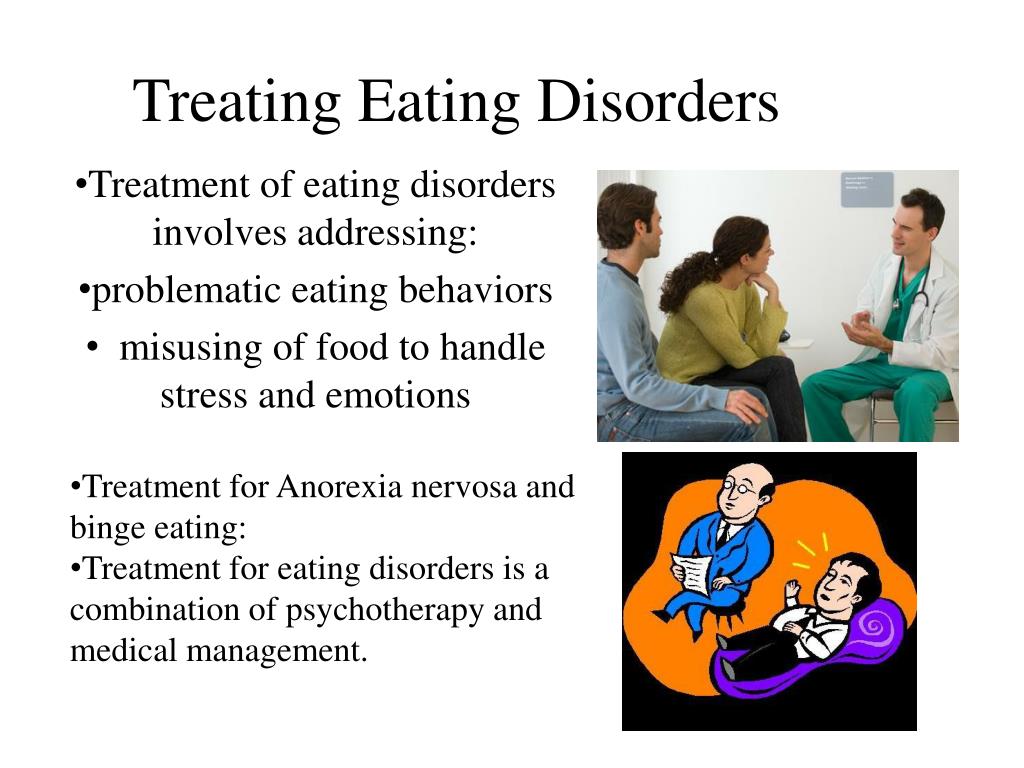
Treating Eating Disorders. Treatment for Anorexia nervosa and binge eating: Treatment for eating disorders is a combination of psychotherapy and medical management. T reatment of eating disorders involves addressing: problematic eating behaviors misusing of food to handle stress and emotions.
Treating Eating Disorders - slide 1
01 / 4Treating Eating Disorders
1 / 17

Télécharger la présentation

Treating Eating Disorders
Une image / un lien ci-dessous est fourni (tel quel) pour télécharger la présentation

Politique de téléchargement : le contenu du site vous est fourni TEL QUEL pour votre information et votre usage personnel ; il ne peut être vendu, concédé sous licence ni partagé sur d’autres sites sans l’accord de son auteur.Le contenu vous est fourni TEL QUEL, pour votre information et votre usage personnel uniquement. Téléchargez la présentation en cliquant sur ce lien. Lors du téléchargement, si vous ne parvenez pas à télécharger une présentation, l’éditeur a peut-être supprimé le fichier de son serveur.Pendant le téléchargement, si vous ne parvenez pas à obtenir une présentation, le fichier a peut-être été supprimé par l’éditeur.

F I N

Plus de contenu associé

Transcription de la présentation
  1. Treating Eating Disorders • Treatment for Anorexia nervosa and binge eating: • Treatment for eating disorders is a combination of psychotherapy and medical management. Treatment of eating disorders involves addressing: problematic eating behaviors misusing of food to handle stress and emotions

  2. Treating Eating Disorders • Roughly 30 % of people with anorexia receive treatment; whereas only 6 % of bulimics receive treatment • Sometimes it’s hard to treat because of denial and secrecy: • Arrange to speak w/ friend in a private place • Express your concerns • Listen to your friend and offer support • If you are upset about your friend’s situation, seek professional counseling and help

  3. How are Athletes Different from General Population • More common in athletes than general population and more common in female athletics than male athletics • Leanness-dependent/weight-dependent sports such as wrestling, body-building, gymnastics. • Pressure in sports to be thin/lean, athletes in these sports often fluxgate weight in order to meet demands • Judged sports such as ballet, gymnastics, figure skating are found to bet at the highest risk

  4. How are Athletes Different from General Population • Factors such as: perfectionism, high self-expectations, competitiveness, hyperactivity, repetitive exercise routines, compulsiveness, drive, body image distortion, pre-occupation with dieting and weight. • These factors were all found to be common in Athletes and those who have Anorexia. Unfortunately it’s easy to develop if you are an athlete.