SlideServe
Menu
Préférences
© SlideServe · v2026

Understanding the Rapid Prototyping Process for 3D-Printed Artificial Bones

oprah avatar
5 diapositives · 167 Views · Aug 25, 2014

This guide outlines the rapid prototyping process used in 3D printing, specifically focusing on inkjet technology. By layering water-based adhesive and alpha-tricalcium-phosphate (alpha TCP) powder, this additive process creates lightweight, porous models of human bones. These printed bones can replace lost or broken bones, allowing real bone to grow into the structure and be safely absorbed by the body. It also details the accepted file types for inkjet printing, including STL, DXF, and more, outlining how these files are processed into slice files for printing.
Understanding the Rapid Prototyping Process for 3D-Printed Artificial Bones - slide 1
01 / 5Understanding the Rapid Prototyping Process for 3D-Printed Artificial Bones
1 / 17

Télécharger la présentation

Understanding the Rapid Prototyping Process for 3D-Printed Artificial Bones
Une image / un lien ci-dessous est fourni (tel quel) pour télécharger la présentation

Politique de téléchargement : le contenu du site vous est fourni TEL QUEL pour votre information et votre usage personnel ; il ne peut être vendu, concédé sous licence ni partagé sur d’autres sites sans l’accord de son auteur.Le contenu vous est fourni TEL QUEL, pour votre information et votre usage personnel uniquement. Téléchargez la présentation en cliquant sur ce lien. Lors du téléchargement, si vous ne parvenez pas à télécharger une présentation, l’éditeur a peut-être supprimé le fichier de son serveur.Pendant le téléchargement, si vous ne parvenez pas à obtenir une présentation, le fichier a peut-être été supprimé par l’éditeur.

F I N

Plus de contenu associé

Transcription de la présentation
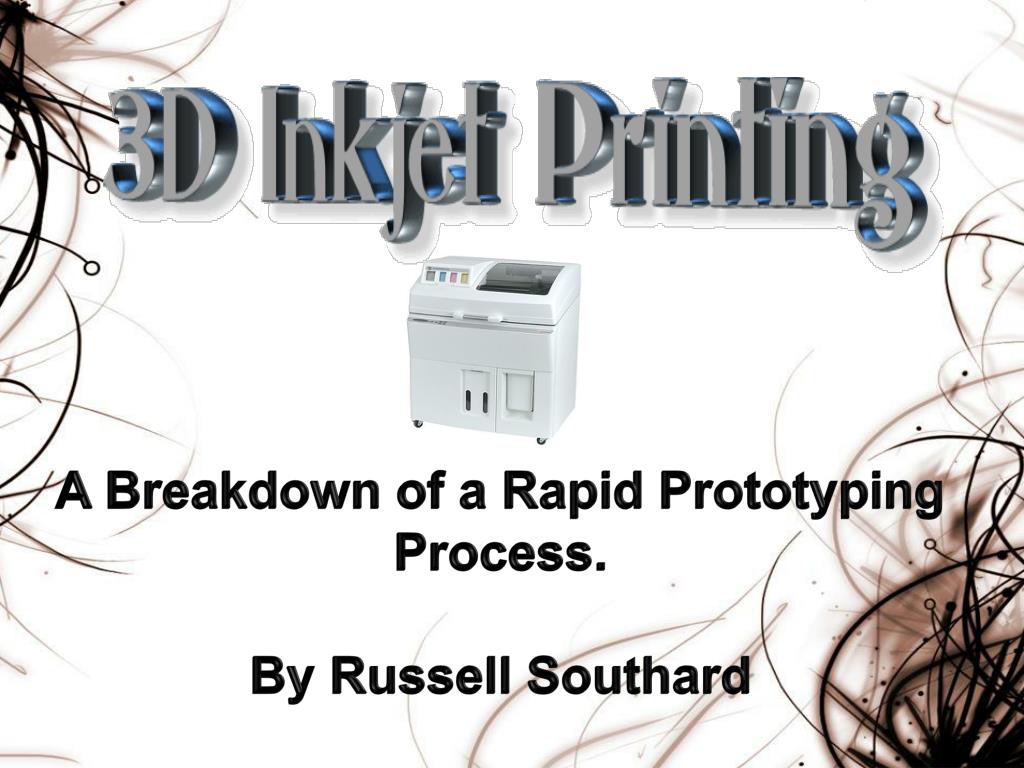
  1. A Breakdown of a Rapid Prototyping Process. By Russell Southard

  2. How It Works • Inkjet Printing is an additive process which works by laying down alternating layers of water-based adhesive (“ink”) and alpha tricalcium-phosphate (alpha TCP) powder. The adhesive hardens the alpha TCP powder.

  3. File Types • The file types accepted by most inkjet printers are .stl, .dxf, .hpgl, .wrl, .ply, and .sfx. • The files are slice files, which take the part and break them down into layers about 15/100th to 20/100th of a millimeter.

  4. 3D Printing used to Create Artificial Bones The Inkjet printer can create models of human bones, replacing lost or broken bones. The Inkjet Bones are lightweight and porous. The real bone will grow into the porous printed bone and replace it. The Printed bone will be absorbed safely by the body.

  5. Bibliography • The Pink Tentacle • Trnmag • Access Science