
Contraception
E N D
Presentation Transcript
Contraception Winter 2017
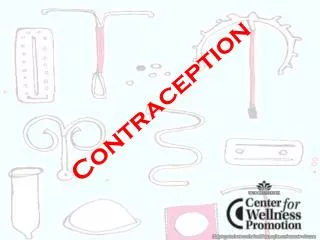
Contraception • Variety of methods • Categorized by methodology • Barriers • Hormonal methods • Fertility awareness methods • Sterilization • Contraceptive issues vary across countries • Contraceptive methods in the U.S.(Guttmacher Institute, 2012) • Under Affordable Care Act, rate for uninsured women reduced 1/3 • Contraceptive methods in the U.S., 1995 vs. 2006-10 (CDC) • Contraceptive prevalence (Excel, pdf map) across the world (United Nations, 2012) • Contraceptive prevalence by method (WHO, 2015; page 10, Figure 4), or prevalence by method (United Nations, 2011)
Why Does Contraception Matter? • We (taxpayers) pay for many unexpected pregnancies • Rates of unintended pregnancy (Guttmacher Institute) • How much (Guttmacher Institute) • Youth comparisons in Germany, France, Netherlands (Advocates for Youth) • Adolescent Fertility Rate (World Bank)
Contraceptive Issues You Decide
Contraceptive Issues • Effectiveness against pregnancy • Side effects • Potential unidentified effects of contraceptive use over the long term • Cost • Religion • Interactions with other medications • Sexually transmitted infection protection • Convenience • Reversibility • Length of effectiveness • Benefits outside of contraception (e.g. using hormone-based contraception to regulate menstrual cycle, reduce menstrual pain, reduce heavy menstrual bleeding, reduce menstrual migraine)
Contraceptives – How They Work • Dependent Upon Category • Barriers • Hormone-Based Methods • Sterilization • Fertility Awareness Methods
Sterilization • Sterilization = permanent contraception • Women undergo tubal ligation or implant • Men undergo vasectomy • The second most common contraceptive method used in the United States (men’s and women’s methods combined) • No formalized data collection system exists • Data retrieved from surveys, questionnaires • Female sterilization: 700,000/year (emedicinehealth.com) • Vasectomies: 500,000/year (WebMD)
Sterilization: Vasectomy • Vasectomy blocks sperm from traveling through the vas deferens, preventing sperm from mixing into semen • No glands or organs are removed • Effectiveness: 99%+ • Considered irreversible
Sterilization: Vasectomy • Vas deferens must be isolated • The vas deferens can be cut and tied, clamped, cauterized, no scalpel technique • Another form of contraception must be used for a few months
Sterilization: Vasectomy • Cost: $0-1000 (plannedparenthood.com) • Not currently covered via Affordable Care Act • Planned Parenthood may provide no- or low-cost vasectomies; state plans may offer benefit (Oregon, e.g.) • Side effects: bruising, sensitivity/pain, sperm leaking from tubes may lead to small lump (usually clears up on its own), antibodies to sperm may develop, reducing chances of fertility in a reversal • Complications: rare, usually associated with infection (fever, pus/blood from incision site, swelling, pain); ends of tubes may grow back together (very rare); decreased sexual desire (4 out of 1000 cases per Planned Parenthood) - no apparent physical cause
Sterilization: Vasectomy • Animation (BUPA Health via YouTube, 2:36) • Video(vasectomymedical.com) • Vasectomy (vasovasostomy) reversal video (Vimeo.com, 4:00)
Sterilization: Tubal Ligation • Surgical technique • Animation (1:35+) • Close fallopian tubes, preventing egg from traveling to uterus, preventing sperm from reaching egg • Neither organs nor glands are removed • Effectiveness: 99%+ • Considered irreversible
Sterilization: Tubal Ligation • Tubal sterilization: • Tubes can be tied and cut (Pomeroy technique) • Tubes can be cauterized • Tubes can be clipped, clamped • These incision methods often performed after childbirth/abortion
Sterilization: Tubal Ligation • Cost: $0-3000 • Side effects: thought by many to be rare; hormonal imbalance may lead to increased menstrual bleeding, cramping; adhesions • Complications: infection, internal bleeding, ectopic pregnancy • Before/after photos (private Flickr account)
Sterilization: Implants • Non-incision method • No general anesthesia • Under an hour • Coils inserted into fallopian tubes • In following months, coils and tissue grow together, forming barrier to prevent sperm from reaching egg
Sterilization: Implants • Side effects: expulsion of coil inserts, risk for ectopic pregnancy, cramping, menstrual changes, nausea/vomiting • Animation (YouTube) • Thousands of complaints regarding implant complications reported to FDA (NY Times, 2015)
Intrauterine Contraceptives (IUC’s) • IUC’s are made of flexible plastic, available only through prescription • Two types (U.S.) • ParaGard (copper-based IUC) • Hormone-based IUC’s • Mirena • Skyla • Liletta • Kyleena
IUC’s: ParaGard • ParaGard contains copper • Copper prevents sperm from fertilizing an ovum • Appears to be disagreement on whether ParaGard also causes inflammatory response in uterine cavity • Copper may also affect the ovum, reducing its ability to become fertilized (Medscape) • Amount of copper released is less than needed in daily diet • Copper intolerance or insensitivity would preclude use of ParaGard
IUC’s: Paragard • Requires insertion into uterus by healthcare provider • Takes only a few minutes • Insertion may cause cramping, dizziness • Once inserted, may remain in place for ten years • Patient should not feel IUD • Since no hormones present, monthly cycle should remain unchanged • Insertion video • Effectiveness: 99%+ against pregnancy • Requires monthly checking for IUD slippage
IUC’s: ParaGard • Side effects: heavier and longer periods, cramping, spotting in between periods • May lessen after a few months on ParaGard • Complication risks: pelvic inflammatory disease shortly after insertion, perforation of uterus, expulsion • Copper may provide protective benefit against endometrial cancer • Cost: $0-1000 (Planned Parenthood)
Hormone IUC’s: Mirena • Hormonal method (pregestogen) • Intrauterine device • Lasts for five years • Mirena: • Prevents sperm from fertilizing ovum • Prevents release of egg • Changes uterine lining
Hormone IUC’s: Mirena • Insertion: Similar to ParaGard • Effectiveness: 99%+ against pregnancy • Cost: $0-1000 (Planned Parenthood, Bedsider.org) • Side effects: Abdominal cramping (10% of users during first few months), acne, breast tenderness, headache, mood changes, back pain • May lessen after a few months • As use continues, less menstrual bleeding • Complication effects: ovarian cysts, pelvic inflammatory disease shortly after insertion, perforation of uterus, expulsion
Other Hormone—Based IUD’s • Skyla • Liletta • Kyleena • Differences (table 1, kff.org) • Effectiveness timeframe • Amount of progestin (Picture = Skyla & Mirena)
IUC’s • Internal Birth Control- IUD’s (via Youtube) • Insertion of IUC (Medialvideos.us)
Barrier Contraceptive Methods • Physical barriers • Prevent sperm from entering cervix • Block sperm from fertilizing ovum
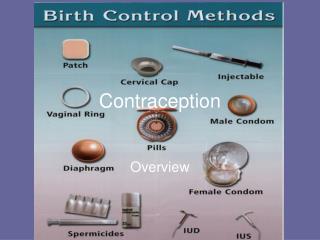
Barrier Contraceptive Methods • Historically, pessaries used • Objects or substances inserted into vagina • Pregnancy prevention effectiveness • Infection effectiveness • Current barrier methods: spermicide, male condom, female condom, diaphragm, cervical cap, sponge
Contraceptive Barriers • Barriers generally have less effectiveness against pregnancy than sterilization, IUC’s, hormone contraceptive methods • Of all contraceptive methods, two barriers provide the greatest protection against sexually transmitted infections • External (“male”) condom • Internal (“female”) condom Public domain image, created by Villy Fink Isaksen, was downloaded from Wikimedia Commons
External (“Male”) Condom • Available over the counter in many colors, types, sizes, with & without lubricant • Placed on an erect penis • Prevents ejaculate from entering vagina • Also used to prevent infection transmission • New condom for each act of intercourse • Expiration date • Typical effectiveness: 85-90%, “perfect use: 95% • Used for anal sex, but not FDA approved for that purpose Public domain image at left was taken by ClaudiaM1FLERéunion, and downloaded via Wikimedia Commons
External (“Male”) Condom • Most are latex, free-$1 per condom in U.S. • Some are polyurethane • May transfer heat better than latex • More likely to break vs latex (7.2% vs 1.1% in Guttmacher Institute reference) • More expensive, ~$1+ • Polyisopropene • Latex-like without latex • Lifestyles and Durex brands, ~$0.50+ • Lambskin • Sheep intestinal membrane • Less effective against infection transmission (~$3) • Kitemark Condom Testing (National Geographic)
Internal (“Female”) Condom • FC2 nitrile condom, available over the counter • Two rings: closed, open ends • Inserted prior to intercourse, up to several hours • Prevents ejaculate from reaching vagina • Cost: $1.25-4 per condom • New condom for each act
Internal (“Female”) Condom • Effectiveness: ~80% typical, 95% “perfect” (Planned Parenthood) • Animation • Used for anal sex, but not FDA approved for that purpose
Barriers: Spermicide & Nonoxynol-9 • Spermicides inserted before vaginal intercourse, to stop sperm movement • Nonoxynol-9 is ingredient in spermicides • Nonoxynol-9 originally designed to protect against HIV • In last 20 years, opposite appears to be reality • Among commercial sex workers in Africa, Thailand • Frequent use • Nonoxynol-9 may increase risk for disease transmission • Increases vaginal irritation, which can lead to lesions/sores • Lesions typically result in disease transmission vulnerability • Concern continues (Smith-McCune, et.al., PLOS One, 2015) • FDA requires manufacturers to provide warning
Contraception: News, Interesting Info • Caya – new diaphragm, 2015 (0:30-2:35, product website) • Silk Parasol (path.org, Silk Parasol via product website) • Proposed panty condom in Uganda (monitor.co.ug, 2015)
Contraception: The Past • Male Contraceptive: Heat • Prolonged heat exposure can impair sperm production in testes • Ancient method • Effectiveness? Research by Voegeli in 1940’s: • 116 degree bath • 45 minutes • Every day • Three weeks • Six months of sterility
Contraception: Impact of Heat on Sperm • Upper left: coiled tail • Upper right: bent tail • Lower left: double head • Lower right: triple head Dada, R, Gupta, NP, & K. Kucheria. Deterioration of Sperm Morphology in Men Exposed to High Temperature. Journal of the Anatomical Society of India. Vol. 50, No. 2 (2001-07-2001-12)
Contraception Hormonal Methods
Hormonal Contraceptives: Mechanism of Action • Synthetic estrogen and/or synthetic progesterone • Combination hormone contraceptives halt ovulation (release of egg) • No egg = no pregnancy • HybridMedical video: Ovulation (YouTube)
Hormone-Based Contraception • Estrogen • Usually ethinyl estradiol • Progestin • Many types • Types vary in terms of side effects • Blood lipids • Break-through bleeding • Weight gain/metabolism • Acne Source: Dawn Stacey, About.com
Estrogen • Estrogen suppresses development of follicle within ovary • Estrogen changes the endometrial lining, making the uterine environment less accommodating to a fertilized ovum
Estrogen • Estrogen makes progestin activity stronger • Progestin manipulates one of the hormones responsible for ovulation • So, even if estrogen does not completely prevent follicle development, it works with progestin to prevent ovulation
Progestin • Progestin thickens cervical fluid (cervical mucus) • Thicker fluid hampers sperm movement • Progestin also changes the endometrial lining in uterus • Reduces likelihood for egg implantation • Progestin-only methods may not inhibit ovulation • Varies from one cycle to another • Method dependent (Depo-Provera inhibits ovulation, minipills may not) • Effectiveness due to cervical fluid, endometrial changes
Bottom Line: Estrogen & Progestin Roles in Hormonal Contraception • Hormonal contraceptive methods work to prevent ovulation • Hormonal methods thicken cervical fluid to make sperm transport difficult • Hormonal contraceptive methods change the lining in uterus to make fertilized egg implantation difficult
Hormonal Contraceptives Side Effects • Estrogen effects • Progestin effects • Androgen effects
Hormone Contraceptive Side Effects • Estrogen: Hypertension, headache, breast fullness, irritability, nausea, vomiting, bloating, breakthrough bleeding • Progestin: Headache, breast tenderness, hypertension • Androgenic: Acne, weight gain, hair growth, fatigue, depression • Each person is different, so the above effects are guidelines • Chart (Dawn Stacey, about.com) • Side effects may change if the problem is dose-related • Source: Carl Rice, et.al., Selecting and Monitoring Hormonal Contraceptives: An Overview of Available Products, U.S. Pharmacist; 6: 62-70
Hormone Contraceptive Contraindications (especially combination methods) • Women 35 years and older who smoke • Women with history of cardiovascular issues should avoid estrogen • Epilepsy, if using specific medications • Obesity may be related to effectiveness issues (consider IUC) • Certain bariatric procedures • Migraine headaches • Breast cancer • Cervical cancer • STI if using IUD • This list not exhaustive • Reproductiveaccess.org chart
Hormone Contraceptive Benefits • Regulation of menstrual bleeding • Reduced risk of ovarian, uterine cancer • Reduced menstrual pain (pills, implant) • Control of excess hair growth • Reduced acne