The Protestant Reformation: Revisiting Christian Beliefs and Practices
Explore the historic events of the Protestant Reformation in 1517, impact on Christianity, key figures like Martin Luther and John Calvin, and the Counter Reformation. Learn about indulgences, theological debates, and political dimensions of this pivotal period.

The Protestant Reformation: Revisiting Christian Beliefs and Practices
E N D
Presentation Transcript
The Three Branches of Christianity • One Church – The Five Patriarchs • 1054 The Great Schism – Filioque, St. Peter, Greek/Latin • Eastern (Greek) Orthodox • Roman Catholic • 1517 – Protestant Reformation
Indulgences • Sin • Temporal versus eternal punishment • Penance • Abuse of indulgences • Leo X and St. Peter’s Basilica • Sixtus IV – indulgences for the dead • Tetzel - "As soon as a coin in the coffer rings / the soul from purgatory springs"
Pre-reformers • Jan Hus – Bohemian, protested indulgences, immorality in clergy, burned at stake • John Wycliffe – translator of Bible into English
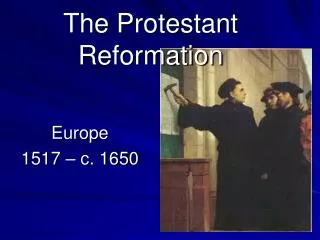
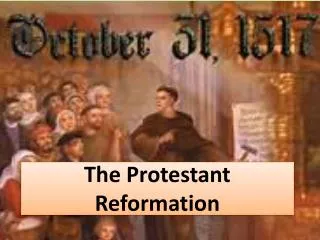
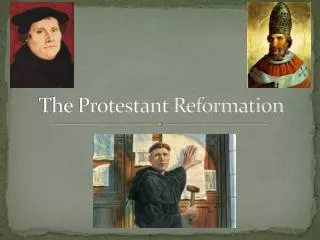
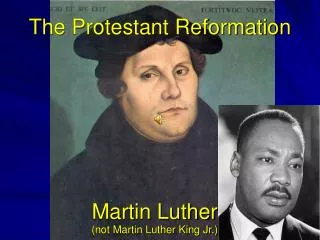
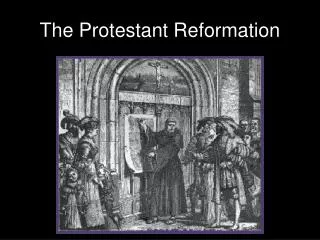
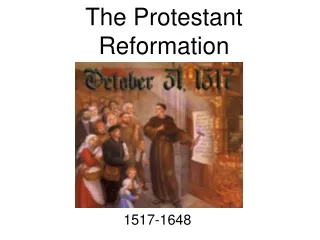
Martin Luther • German monk • Philip Melancthon • 1517 – 95 Theses in Wittenburg • Still Catholic • Gutenburg’s printing press
John Calvin • Moved to Geneva from France • Resisted papal authority • Set up own society in Geneva - 1535 • No mass, no monasteries, no longer Catholic, no singing except Psalms
The Counter Reformation • 1517 - Oratory of Divine Love • 1545 – Council of Trent called by Pope Paul III • Monastic reforms, stricter rules • Established Jesuits – militant missionaries (Ignatius Loyola) • Inquisition – weed out heresies • List of heretical texts
Ignatius Loyola • Basque • knight, mystical experiences • Became monk, traveled to Jerusalem • Returned during Counter-Reformation • Wrote Spiritual Exercises • Highly intellectual and ascetic • Founded Jesuits – active missionaries
Political dimensions • Northern Europe and Scandinavia turned Lutheran • Southern, Central and Western Europe remained mainly Roman Catholic • Eastern Orthodox did not experience a reformation • German-speaking lands in HRE were the first battleground • Charles V and the Schmalkaldic League • 1555 – Peace of Augsburg • Only protected Lutherans, not Anabaptists or Calvinists