SlideServe
Menu
Préférences
© SlideServe · v2026

Atopic dermatitis - ECZEMA

plato avatar
11 diapositives · 2.6K Views · Jul 25, 2014

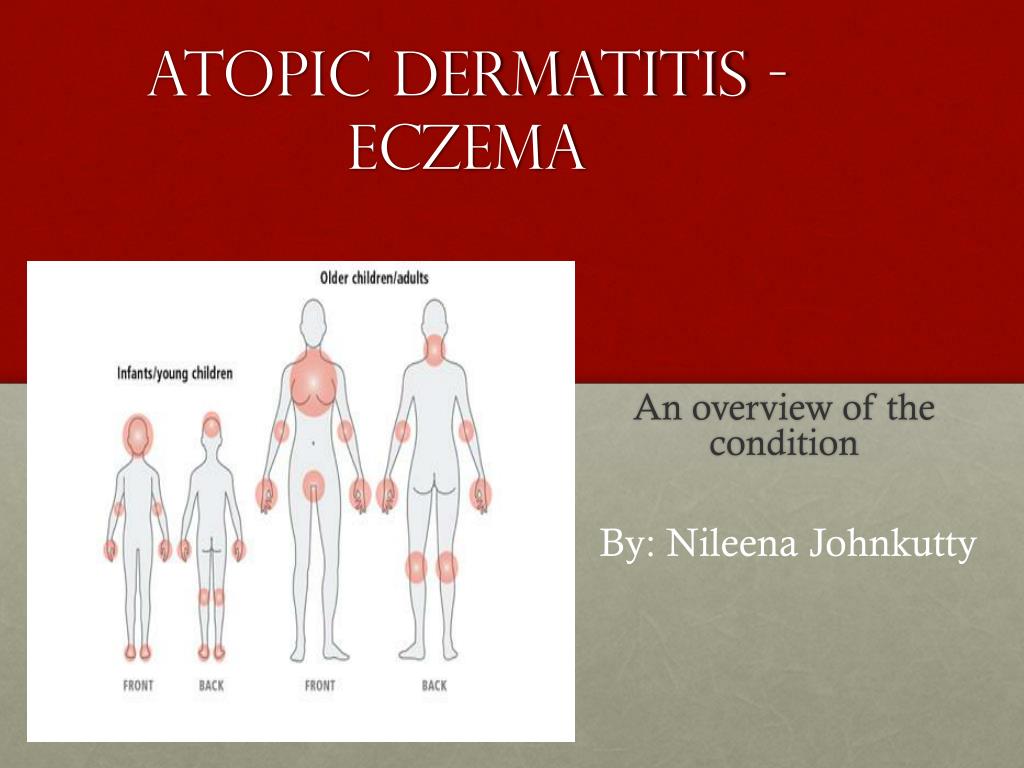
Atopic dermatitis - ECZEMA. An overview of the condition. By: Nileena Johnkutty. eczema: A CHRONIC DISEASE. Refers to several different skin swelling conditions It is referred to as dermatitis
Atopic dermatitis - ECZEMA - slide 1
01 / 11Atopic dermatitis - ECZEMA
1 / 17

Télécharger la présentation

Atopic dermatitis - ECZEMA
Une image / un lien ci-dessous est fourni (tel quel) pour télécharger la présentation

Politique de téléchargement : le contenu du site vous est fourni TEL QUEL pour votre information et votre usage personnel ; il ne peut être vendu, concédé sous licence ni partagé sur d’autres sites sans l’accord de son auteur.Le contenu vous est fourni TEL QUEL, pour votre information et votre usage personnel uniquement. Téléchargez la présentation en cliquant sur ce lien. Lors du téléchargement, si vous ne parvenez pas à télécharger une présentation, l’éditeur a peut-être supprimé le fichier de son serveur.Pendant le téléchargement, si vous ne parvenez pas à obtenir une présentation, le fichier a peut-être été supprimé par l’éditeur.

F I N

Plus de contenu associé

Transcription de la présentation
  1. Atopic dermatitis - ECZEMA An overview of the condition By: Nileena Johnkutty

  2. eczema: A CHRONIC DISEASE • Refers to several different skin swelling conditions • It is referred to as dermatitis • The most common type of eczema is Atopic Dermatitis which occurs as a response to an allergic reaction • Usually occurs in babies and children but can happen to ANYONE • It usually occurs in people who live in dry and urban climate • Sometimes, atopic dermatitis may develop into asthma and hay fever or it may improve and go away. • You can’t catch the disease or spread it.

  3. THE CAUSE OF atopic dermatitis • Though the exact cause is not known, but it is likely caused by both genetic and environmental factors. • However there are many different symptoms that can occur and to find that out: Doctors will ask questions to: • Learn about your symptoms • Know when symptoms occur • Eliminate out other diseases • Figure out the roots of your symptoms • Find out whether other family members with allergies • Ask whether the patient has been around something that may seem irritating

  4. Allergens and Irritants • Irritants are particles that can worsen the condition which can cause red and itchy skin. • They include: • Wool • Soaps and disinfectants • Perfumes and makeup • Dust or sand • Cigarette smoke • Allergens are substances that come from plants, animals, or the air. • They include: • Eggs • Peanuts • Dust Mites • Pollen

  5. Types of Dermatitis • Allergic Contact Dermatitis – results from direct contact with allergen • Irritant Contact Dermatitis – develops when the skin comes into contact with an irritant • Neurodermatitis – develops due to repeated scratching and usually occurs in the scalp, neck or wrist. • Perioral Dermatitis – occurs around the mouth but can also affect the area around the nose, cheeks, and eyes. • Seborrheic Dermatitis – is usually found on oily areas of the body such as the face and upper chest • Stasis Dermatitis – occurs when varicose veins or other symptoms causes the build up of fluids in the lower legs which causes swelling and itching

  6. Atopic Dermatitis Adult Vs. Infants

  7. Treatment • Treatment is planned in a collaborative manner based on: • Age • Symptoms • General Health • Atopic dermatitis treatment is planned to heal skin and prevent flaresby: • Developing a skin care routine • Avoiding items that result in flares • Treating symptoms when they occur

  8. Popular products

  9. other treatments • Other forms of treatment include: • Skin creams or ointments • Corticosteroids • Antihistamines • Light Therapy • A mix of light therapy and a drug named psoralen • Exfoliation masks and creams • Protection from irritants and allergens

  10. A connection • It has been advised that people with atopic dermatitis should not be vaccinated against small pox since it may worsen their condition • Research is being done on atopic dermatitis to find out how it can be managed, treated, and prevented through a look at: • Genetics • Immune factors • Light factors • New medications • Light therapy

  11. Bibliography "Atopic Dermatitis." (n.d.): n. pag. Fast Facts About. Sept. 2009. Web. 18 Aug. 2013. <http://www.niams.nih.gov/Health_Info/Atopic_Dermatitis/atopic_dermatitis_ff.asp>. Staff, Mayo Clinic. Mayo Clinic. Mayo Foundation for Medical Education and Research, 21 Aug. 2012. Web. 18 Aug. 2013. <http://www.mayoclinic.com/health/dermatitis/DS00543>. "Eczema: MedlinePlus." U.S National Library of Medicine. U.S. National Library of Medicine, n.d. Web. 18 Aug. 2013. <http://www.nlm.nih.gov/medlineplus/eczema.html>.