Download
1 / 6
60 likes | 245 Vues
Spinal cord injuries can be categorized as complete or incomplete, impacting motor function and sensation. A complete injury severs the spinal cord entirely, leading to total loss of function below the injury site, while an incomplete injury allows for some preserved function. Injuries vary by region: cervical injuries (C1-C7) may affect respiratory function and arm/leg movement; thoracic injuries lead to loss of midsection control; lumbar injuries impact leg movement and bowel/bladder functions. Rehabilitation is crucial post-surgery for recovery.

E N D
Spinal Cord Injury A complete or Incomplete break in the Spinal Cord.
Incomplete/Complete Spinal Cord Break. Complete- This is where the Spinal Cord is severed all the way through.Incomplete- This is a break that does not go all the way through the Spinal Cord.
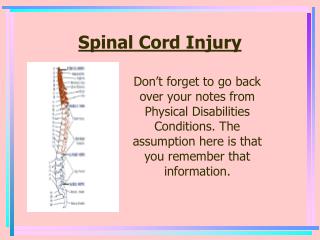
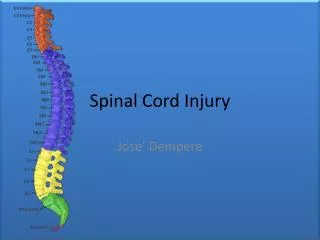
Cervical Spine Injury C1 – C2 damage can cause respiratory distress and almost always death.C3 - C7 cause damage paralysis to the arms, legs, and midsection.
Thoracic Spinal Injury - The Person will most likely loose bowel control along with loss of midsection muscles, (e.g. abdominals and pectorals).- Paralysis will also most likely occur as well, from the chest down while the arms, neck and face still function properly.
Lumbar Spinal Injury - These injuries occur in the lower back and will most likely effect the legs, along with the muscles that control the bladder and bowels.
Recovery After about a week to 6 months after surgery, meant to get rid of the bone fragments around the bone to prevent future injury, the patient will go into rehabilitation over the next few weeks.