Neutralization Lab
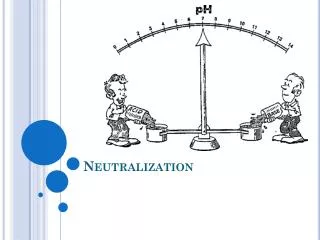
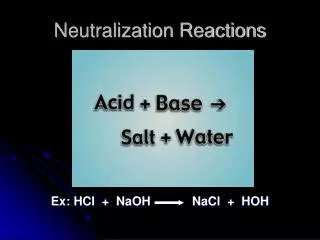
This lab experiment investigates two different neutralization reactions using common acids and bases. Students will mix hydrochloric acid (HCl) with sodium hydroxide (NaOH) and vinegar (acetic acid) with ammonia (NH3), measuring the temperature changes and pH to observe the neutralization process. Key components of the lab include creating a calorimeter, careful handling of chemicals, and documenting results through tables and graphs. The goal is to determine the strength of each reaction and understand the final products formed after neutralization.

Neutralization Lab
E N D
Presentation Transcript
Pre Lab Notes What is neutral? What is a neutralization reaction?
What are the common reactants in a neutralization reaction? What are the common products? NaOH + HCl NaCl + H2O CH3COOH + NH3 CH3COONH4
Lab Prep Purpose: To study the results of two neutralization labs. Hypothesis: The strong acid is ________, the strong base is__________. Materials: NaOH HCl ( Ammonia) NH3 ( Vinegar) CH3COOH pH Strips Calorimeter Thermometer Safety Precaution: Be careful with the HCl and NaOH, wash hands after.
Procedure • Make a calorimeter by cutting the lip off of one of the cups. • Put 30 ml of HCl in the 50 ml beaker, read the temperature, pH of both HCl and NaOH and record. • Place the beaker in the full cup, put 30ml of NaOH in the HCL, cover the cup with the other one take and record the temperature every 30 seconds until the reaction stops. • Use the pH paper to check for neutralization • Wash out the beakers, then repeat steps 1-5 with vinegar and ammonia.
Graph You will need a line graph for each reaction. Temperature on the Y axis and time on the X axis.
Questions • Which was reaction was the strongest? • How do you know? • At the end of the reaction were both neutralization reactions neutral? Which was not? How many drops of acid or base did you need to add to neutralize the product? • What were the products of the reactions?
Diagram You will need a diagram of: The calorimeter The 2 reaction beakers labeled with the reactants Thermometer