
Exploring Cloud Formation and the Water Cycle

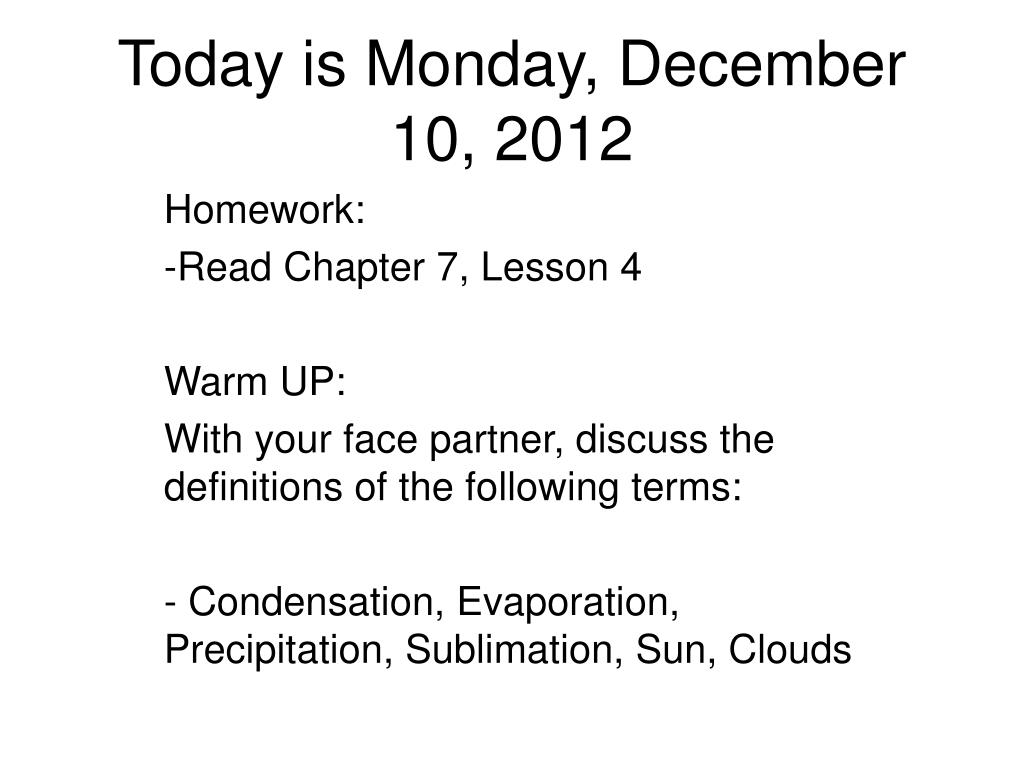
In this lesson, students will dive into the concepts of cloud formation and the water cycle, focusing on the influence of temperature, pressure, and land topography. By discussing key terms like condensation, evaporation, precipitation, and different cloud types, learners will gain a comprehensive understanding of how environmental factors affect cloud development. The lesson includes interactive partner discussions about various cloud forms, such as cirrus, stratus, cumulus, and thunderheads, enhancing engagement and retention of knowledge.
Télécharger la présentation 
Politique de téléchargement : le contenu du site vous est fourni TEL QUEL pour votre information et votre usage personnel ; il ne peut être vendu, concédé sous licence ni partagé sur d’autres sites sans l’accord de son auteur.Le contenu vous est fourni TEL QUEL, pour votre information et votre usage personnel uniquement. Téléchargez la présentation en cliquant sur ce lien. Lors du téléchargement, si vous ne parvenez pas à télécharger une présentation, l’éditeur a peut-être supprimé le fichier de son serveur.Pendant le téléchargement, si vous ne parvenez pas à obtenir une présentation, le fichier a peut-être été supprimé par l’éditeur.
F I N