Comprehensive Explanation of Airspace Infringement and ESSIP Plan 2014 Implementation
This document provides a detailed overview of airspace infringement, defined as unauthorized entry into controlled airspace without prior approval from the relevant authority. Highlighting the role of VFR flights, particularly General Aviation (GA) pilots, as key contributors to infringements, it emphasizes the need for proactive regulatory measures. The report reviews recent updates in the ESSIP Plan 2014, noting the stagnation in implementation progress compared to 2012, and offers guidance on improving training and procedures. Key contacts include Ingrid Feijt and Sid Lawrence from EUROCONTROL.

Comprehensive Explanation of Airspace Infringement and ESSIP Plan 2014 Implementation
E N D
Presentation Transcript
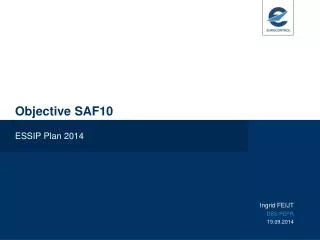
Objective SAF10 ESSIP Plan 2014 Ingrid FEIJT DSS/PEPR 19.09.2014
Comprehensive Explanation (1/2) • Airspace infringement, aka “unauthorised penetration of airspace”, is defined as a flight into notified airspace without previously requesting and obtaining approval from the controlling authority of that airspace. • VFR flights are the main originators so GA pilots are the main target => Regulator needs to take the lead for successful implementation. ESSIP Plan 2014 / Objective SAF10
Comprehensive Explanation (2/2) • Not of concern to countries with limited GA/VFR activity and/or no airspace constraints/limitations. Real role for REG (training requirements for private pilots). • Airspace complexity (TMAs) and level of VFR/GA activity are indicators. • Also take into account the way VFR is handled (e.g. controlled or not, TPD or not etc…). ESSIP Plan 2014 / Objective SAF10
What is new or has changed for ESSIP Plan edition 2014 • Deletion of REG01 SLoA ESSIP Plan 2013 / Overview LSSIP 2012
Supporting Material • European Action Plan – Airspace Infringement Reduction • EAP-AIRR Guidance Material ESSIP Plan 2014 / Objective SAF10
ESSIP Report 2013 • Implementation progress is stagnant compared to 2012. • ANSP’s still much more advanced in implementation then the National Regulators. • However, National Regulators are slowly progressing. • Main reasons for delay: • National Regulator has problems in verifying the implementation • National Regulator is still considering the promulgation ESSIP Plan 2014 / Objective SAF10
Objective Coordinator’s Analysis, Recommendations, Tips & Tricks • SLoAs are generic so “Progress” is not enough • Need to add LAs specifying actions taken/planned: • ATCO training updated, ATC procedures reviewed, EUROCONTROL Toolkit used, etc… • Or make reference to national document dealing with this ESSIP Plan 2014 / Objective SAF10
Contacts • Objective Coordinator: FEIJT, Ingrid +32 2 729 5044 ingrid.feijt@eurocontrol.int • DNM Objective Expert(s): LAWRENCE, Sid+32 2 729 3029 richard.lawrence@eurocontrol.int ESSIP Plan 2014 / Objective SAF10