Understanding Visual Perception: From Light to Brain Processing
This overview explores the transduction of visual signals from light to neural impulses within the brain. Initially, sensory information is directed from the eyes to the thalamus, which sorts and interprets these messages before passing them to the cerebrum's sensory areas. We analyze the multi-phase process of vision, detailing how light energy transforms into neural messages, and how feature detectors in the brain identify aspects like color and movement. Understanding these phases provides insight into the complex workings of visual perception.

Understanding Visual Perception: From Light to Brain Processing
E N D
Presentation Transcript
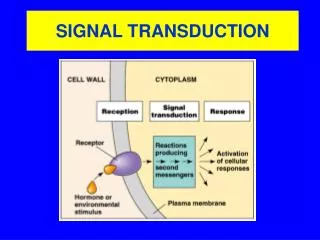
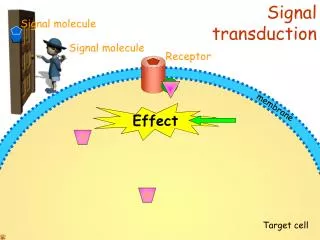
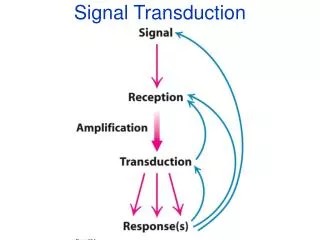
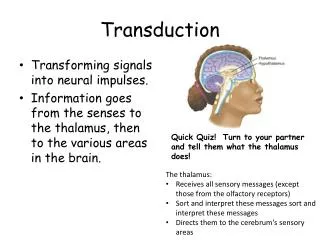
Transduction • Transforming signals into neural impulses. • Information goes from the senses to the thalamus, then to the various areas in the brain. Quick Quiz! Turn to your partner and tell them what the thalamus does! • The thalamus: • Receives all sensory messages (except those from the olfactory receptors) • Sort and interpret these messages sort and interpret these messages • Directs them to the cerebrum's sensory areas
Vision • Our most dominating sense. • What we see is actually rays of light • The rays are actually energy • We receive light energy and transform (transduce) it into neural messages that our brain then processes into what we are consciously seeing
Phase 1: How do we see? Upside down
Phase Four: In the Brain • Goes to the visual cortex located in the occipital lobe of the cerebral cortex • Feature detectors • Parallel processing – our brain does many things at once (it can multi-task) • So the brain processes color, movement, form, and depth at the same time We have specific cells that see the lines, motion, curves and other features of this turkey. These cells are called feature detectors.
Sum of the Phases • We see the scene • Retinal processing • Rods and conesbipolar cellsganglion cells • Feature Detection • Brain’s detector cells respond to specific features – edges, lines, and angles • Parallel processing • Brain cells team to process combined info about features • Recognition • Brain interprets the constructed image based on info on stored images
End of Day 2 • Homework: • Handout/worksheet on vision and parts of the eye