The Impact of Food on WWII: Rations for Home and Soldiers
90 likes | 218 Vues
This piece explores the crucial role of food during World War II, focusing on rations at home, for American soldiers, and for German troops. In Great Britain, food was rationed for over 14 years, while Americans faced their own challenges despite having more variety. The article discusses the psychological effects of food, the difference between American and German military rations, and how food regulation influenced morale and the overall war effort. It poses a thought-provoking question on how equal food resources might have changed the war's outcome.


The Impact of Food on WWII: Rations for Home and Soldiers
E N D
Presentation Transcript
Food in WWII Taylor Whittle
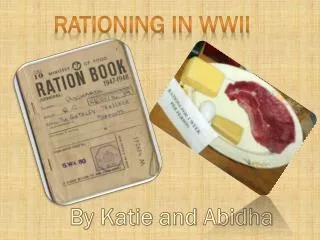
Intro • I will cover food at home, food for soldiers, and food for German soldiers. • “According to Barrow, food was rationed for over 14 years in Great Britain” • WWII has always interested me, especially the food aspect of it. Many great articles from trusted sources have helped me learn more about it. • Troops weren’t the only ones with food troubles
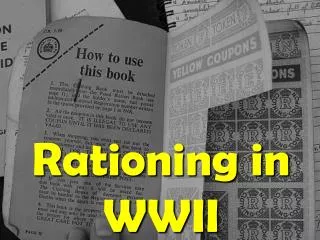
Food at Home • People now had money to spend, from working on the war effort. Marketing was used to hold people off from buying stuff. • Americans diet changed very little- ( Coffee, Sugar ) • Maids left for better pay • Red meat- staple food. Beef- Popular • “the average American ate at 2.5 Ib of meat per week” (Huffington Post) • Even though we had much more than others, Americans wanted more beef. • Black Markets
Continued • Eleanor Roosevelt- White house lead by example • Some foods couldn’t always be found on shelves for short periods of time (potatoes) • Americans were lucky, black markets, government promoted consumption after the war. • Food was rationed at home so there was plenty for the soldiers.
Food for American Troops • Fresh food was rare, navy men were more fortunate • Many different rations • A-cooked food available at bases or on ships • B- cooked perishable foods in a can • C-3,000 calorie a day food in 3 cans. (meat, vegies, cigs, sweets, T.P., gum) • D- ‘logan bars’ chocolate, oatmeal, and sugar. Meant for emergencies. Unpopular. Made so they wouldn’t melt at 120 degrees. “Hitler’s Secret Weapon” (Henry, M)
Continued • Assault Rations- candy and cigs • Heavy breakfast-steak, eggs, whisky • Russians- “Roosevelt Sausage” (Henry, M.) • Fresh Bread, Ice Cream- special occasions • MREs in Australia and New Zealand – Mutton, different vegetables (pumpkin, turnips, onion) • Quality of MRE • Sailors food- “A battleship would average 250 Ib of coffee a day (Pacific War Encyclopedia) • Not all popular, but enough • special foods to boost moral • different foods for different situations
Enemy Rations • U.S. was fortunate • German food- Un-efficient • Amazed by Americans MREs- quality and quantity • Irons- German MRE only in certain situations- carry one or two (meat, cracker-dog treats, vegies, fake coffee) • Punished for eating Irons without permission • Irons not labeled
Conclusion • The distribution of food in WWII was a key aspect of the war. • Food was important, Americans were lucky • Food was important in WWII. I have show how it was important for American citizens at home, American soldiers, and German soldiers. • Food Altered WWII. What would the outcome have been had both sides had equal food opportunities?