Download
1 / 3
30 likes | 179 Vues
This overview examines Britain's pivotal historical context in the early 20th century, encompassing the end of "splendid isolation" and rising competition from Germany. It highlights key figures like Edward VII and George V, as well as significant social reforms in education and welfare. The period also witnesses the rise of trade unionism and violent unrest between capital and labor. The impact of World War I shatters the illusion of peaceful problem-solving, leading to the Irish struggle for independence and the emergence of the British Commonwealth.

E N D
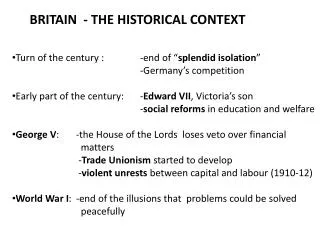
BRITAIN - THE HISTORICAL CONTEXT • Turn of the century : -end of “splendidisolation” • -Germany’s competition • Early part of the century:-Edward VII, Victoria’s son • -social reformsin education and welfare • George V: -the House of the Lordsloses veto overfinancialmatters • -TradeUnionismstartedtodevelop • -violentunrestsbetween capital and labour (1910-12) • World War I: -end of the illusionsthatproblemscouldbesolvedpeacefully
Ireland: -a problemsince the 1880s • -Ulster Protestantswanted unionwith Great Britain • -southernCatholicswanted anindependent • Republic ofIreland-> rebellion • -IRA resortedtoterroristtactics • -1921, creationofIrish Free State withstillsixcounties • of Ulster under Britishrule -> Civil War in the South • Colonies: -DominionImperialConferencedeclaredthem • autonomousbutallyto the Crown and associatedto • the British Commonwealth ofNations • -1920, Mahatma Gandhi -> policy ofnon-violentprotest • againstBritishGovernment
War Poets: - Wilfried Owen, Siegfried Sassoon, • Isaac Rosenberg • -theydescribe the physicalhardship and miseryof the soldier’s life on the Western front, attackingpoliticians and propagandists