
SlideServe
Menu
Préférences
© SlideServe · v2026

Exploring Nuclear Energy

sine avatar
15 diapositives · 354 Views · Jul 09, 2014

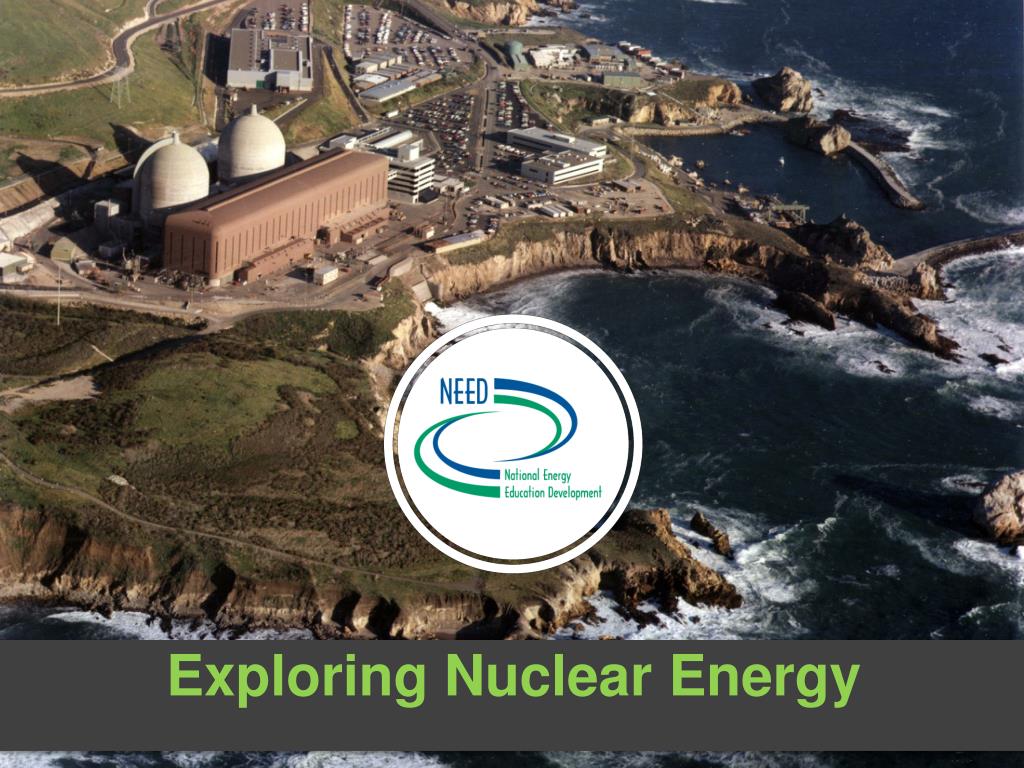
Exploring Nuclear Energy. Nuclear Fusion and Fission. Iron is the “dead end” of both fusion and fission – it is the lowest energy nucleus and cannot be split or fused. Nuclear Fusion Small nuclei into large Immense temperature and pressure Core of stars. Nuclear Fission
Exploring Nuclear Energy - slide 1
01 / 15Exploring Nuclear Energy
1 / 17

Télécharger la présentation

Exploring Nuclear Energy
Une image / un lien ci-dessous est fourni (tel quel) pour télécharger la présentation

Politique de téléchargement : le contenu du site vous est fourni TEL QUEL pour votre information et votre usage personnel ; il ne peut être vendu, concédé sous licence ni partagé sur d’autres sites sans l’accord de son auteur.Le contenu vous est fourni TEL QUEL, pour votre information et votre usage personnel uniquement. Téléchargez la présentation en cliquant sur ce lien. Lors du téléchargement, si vous ne parvenez pas à télécharger une présentation, l’éditeur a peut-être supprimé le fichier de son serveur.Pendant le téléchargement, si vous ne parvenez pas à obtenir une présentation, le fichier a peut-être été supprimé par l’éditeur.

F I N

Plus de contenu associé

Transcription de la présentation
  1. Exploring Nuclear Energy

  2. Nuclear Fusion and Fission Iron is the “dead end” of both fusion and fission – it is the lowest energy nucleus and cannot be split or fused. • Nuclear Fusion • Small nuclei into large • Immense temperature and pressure • Core of stars • Nuclear Fission • Large nuclei into small • Critical mass to sustain • Two isotopes we use

  3. Global Total Primary Energy Supply, 2011 Nuclear provides about 5% of total energy and 11.7% of global electricity generation. Data: International Energy Agency

  4. Top 10 Nuclear Generating Countries Data: Energy Information Administration The NEED Project

  5. The NEED Project U.S. Primary Energy Consumption Source and Sector, 2010 (Quadrillion Btu) Data: Energy Information Administration

  6. The NEED Project U.S. Electricity Production 2011 Data provided by US EIA Net Generation by Energy Source

  7. The NEED Project U.S. Electricity Flow U.S. Electricity Flow, 2011 (Quadrillion Btu) Data: Energy Information Administration

  8. Nuclear Energy Production Percent of Electricity Generated by Nuclear Power • VT- 73.3% • CT-50.3% • SC-49.9% • NJ-49.9% • NH-49.1% • IL-47.8% • VA-36.3% • PA-33.8% • TN-33.4% • MD-32.1% • NC-31.7% • NE-30.9% • NY-30.6% • AZ-27.9% • MI-26.3% • AL-25% • MN-25% • AR-24.7% • GA-24.3% • WI-20.6% • KS-19.7% • LA-18.2% • MS-17.7% • CA-15.9% • MA-13.8% • OH-11% • FL-10.5% • TX-10.1% • MO-9.7% • WA-9.1% • IA-7.8% Data: Nuclear Energy Institute

  9. Anatomy of a Nuclear Power Plant

  10. Anatomy of a Nuclear Power Plant

  11. The NEED Project Advantages of Nuclear Power • Clean • Plentiful Supply • High energy content in uranium • Small fuel pellet • Can provide base load power • Energy savings in transportation • Operating cost is low after construction

  12. The NEED Project Drawbacks to Using Nuclear Power • Initial construction costs • Radioactive waste byproduct • Storage • Natural disasters • Public perception

  13. The NEED Project New Nuclear Technologies • Modular, small-scale reactors • Breeder reactors • http://www.energy.gov/ne/nuclear-reactor-technologies Image courtesy of Department of Energy

  14. The NEED Project Food for thought… Of the 15 methods (wedges) proposed by a Princeton University study to stabilize Carbon Dioxide emissions,13 of them relate energy use. Implementation of any 7 would accomplish the goal of stabilizing emissions. 1. Efficient vehicles2. Reduced use of vehicles3. Efficient buildings4. Efficient coal power plants5. Gas instead of coal power plants6. Capture CO2 at base load power plant7. Nuclear power for coal power8. Wind power for coal power9. Photovoltaic power for coal power10. Capture CO2 at H2 plant11. Capture CO2 at coal-to-synfuels plant12. Wind H2 in fuel-cell car for gasoline in hybrid car13. Biomass fuel for fossil fuel

  15. For More Information The NEED Project www.need.org info@need.org 1-800-875-5029 Energy Information Administration U.S. Department of Energy www.eia.gov The NEED Project