
Development of Flat Beam Production Techniques for Linear Colliders (1998-2000)

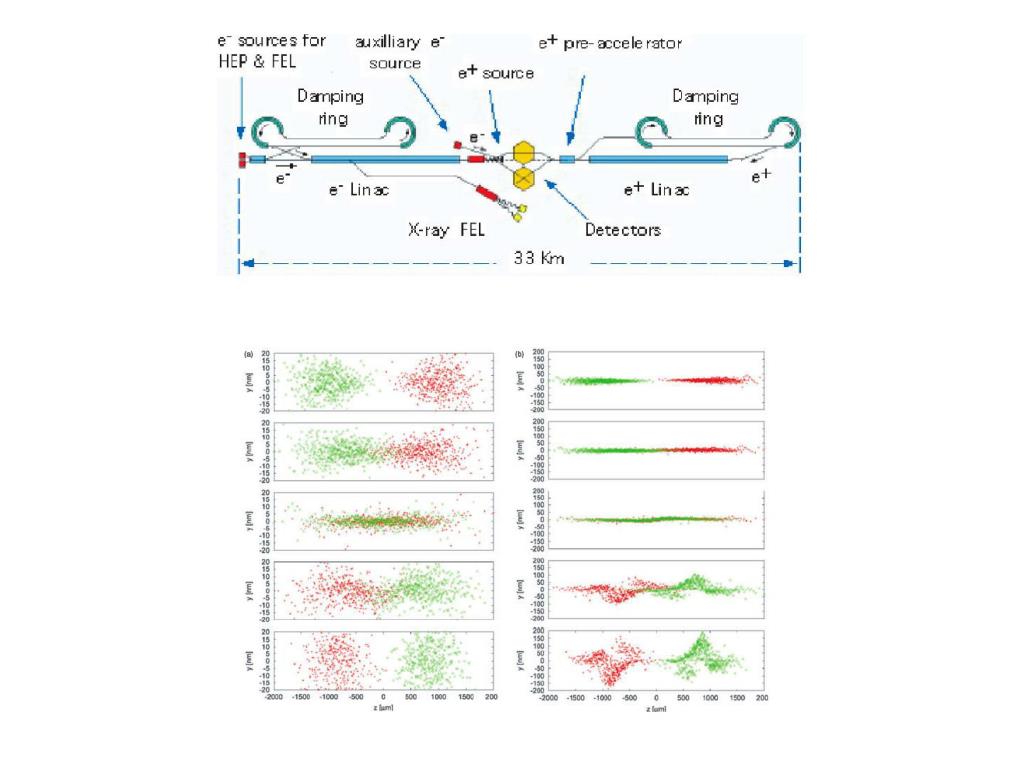
Breakthroughs in the production of flat electron beams for linear colliders achieved between 1998 and 2000. Initially proposed by Y. Derbenev, a linear optics device transformed beams with high horizontal-to-vertical emittance ratios into vortex motion configurations. Subsequent innovations, such as the A0 collaboration's successful generation of flat beams from a photo-injector, highlighted significant advancements in beam physics. The paper details experimental results showing remarkable emittance ratios and outlines techniques that lead to improved beam quality crucial for next-gen linear colliders.
Télécharger la présentation 
Politique de téléchargement : le contenu du site vous est fourni TEL QUEL pour votre information et votre usage personnel ; il ne peut être vendu, concédé sous licence ni partagé sur d’autres sites sans l’accord de son auteur.Le contenu vous est fourni TEL QUEL, pour votre information et votre usage personnel uniquement. Téléchargez la présentation en cliquant sur ce lien. Lors du téléchargement, si vous ne parvenez pas à télécharger une présentation, l’éditeur a peut-être supprimé le fichier de son serveur.Pendant le téléchargement, si vous ne parvenez pas à obtenir une présentation, le fichier a peut-être été supprimé par l’éditeur.
F I N