Download
1 / 8
80 likes | 211 Vues
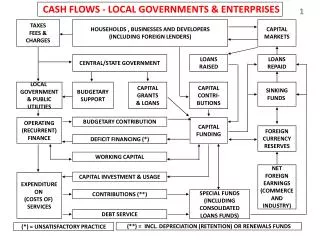
This document explores the intricate cash flow dynamics of local governments and enterprises, addressing the impact of taxes, fees, and charges on households, businesses, and developers, including foreign lenders. It discusses budgetary support, capital grants and loans, working capital, and the challenges of deficit financing. Highlighting major policy outcomes, the necessity for financial regulations, and the significance of transparency in managing public funds, it aims to provide a comprehensive overview for improving fiscal sustainability and community trust.

E N D
CASH FLOWS - LOCAL GOVERNMENTS & ENTERPRISES TAXES FEES & CHARGES HOUSEHOLDS , BUSINESSES AND DEVELOPERS (INCLUDING FOREIGN LENDERS) CAPITAL MARKETS CENTRAL/STATE GOVERNMENT LOANS RAISED LOANS REPAID LOCAL GOVERNMENT & PUBLIC UTILITIES BUDGETARY SUPPORT CAPITAL GRANTS & LOANS CAPITAL CONTRI- BUTIONS SINKING FUNDS BUDGETARY CONTRIBUTION OPERATING (RECURRENT) FINANCE CAPITAL FUNDING FOREIGN CURRENCY RESERVES DEFICIT FINANCING (*) WORKING CAPITAL NET FOREIGN EARNINGS (COMMERCE AND INDUSTRY) CAPITAL INVESTMENT & USAGE EXPENDITURE ON (COSTS OF) SERVICES CONTRIBUTIONS (**) SPECIAL FUNDS (INCLUDING CONSOLIDATED LOANS FUNDS) DEBT SERVICE (**) = INCL. DEPRECIATION (RETENTION) OR RENEWALS FUNDS (*) = UNSATISFACTORY PRACTICE
Financial Rape!(Deficits Don’t Matter!) CAPITAL GRANTS & LOANS BUDGETARY CONTRIBUTION OPERATING (RECURRENT) FINANCE CAPITAL FUNDING DEFICIT FINANCING (*) WORKING CAPITAL * “No!” means “No!”
THE COMPETITION FOR CASH MONEY CREATION (NATIONAL GOVERNMENT) SALES OF ASSETS (INCL. PRIVATIZATION) MAJOR POLICY ISSUES CHARGES, FINES & INTEREST GRANTS & TRANSFERS TAXATION LONG-TERM LENDING LONG-TERM BORROWING (PRIMARY) SOURCES INVENTORY TEMPORARY BORROWING THE POOL OF CASH (INTERMEDIATE) DEPLETIONS (SAVINGS) (INTERMEDIATE) ENHANCEMENTS (DIS-SAVINGS) WITHHOLDING SUPPLIERS PAYMENTS DEBTORS (GRANTING OF CREDIT) (FINAL) USES & ABUSES MONETARY INVESTMENT (WITHDRAWAL) MONETARY INVESTMENT (DEPOSIT) MAJOR POLICY OUTCOMES (OR LOSSES) "F.C.W.A.T! CAPITAL INVESTMENT ACTIVITY & SERVICES GRANTS & TRANSFERS INTEREST ON DEBT
} • FRAUD • CORRUPTION • WASTE • ABUSE • THEFT LOSSES OF CASH, CONFIDENCE, CREDIT RATING, CONTROL AND CREDIBILITY "F.C.W.A.T!" = FINANCIAL REGULATIONS & INTERNAL CONTROLS ACCOUNTING & BUDGETARY CONTROL FRAMEWORK* STANDARD ACCOUNTING CHART AND CODING STRUCTURE KEY CONTROL & MANAGEMENT COMPONENTS * = COMPUTERIZATION PRIORITY
C A (Poor reputation = High costs) COSTS • Interest rates. • Search costs for capital funding. • Regulation & loan conditions. • Choice of Public and/or Private Financing or Implementation Entity Partners. • [Foreign Borrowing] B REPUTATION AS A MARKET FACTOR C D (Good reputation = low costs) E Quality 0 Reputation >