Download
1 / 28
280 likes | 390 Vues
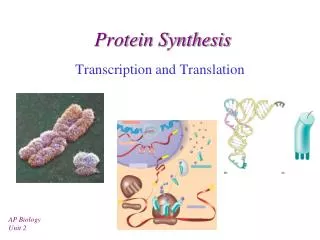
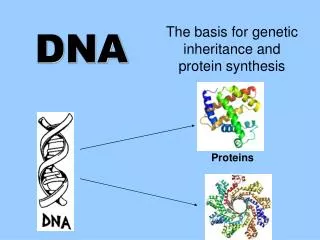
Protein synthesis is the process through which DNA instructs the cell to create proteins, essential for all living organisms. This process includes DNA transcription to mRNA, translation at the ribosome, and ultimately, the formation of proteins. However, mutations can alter DNA, affecting mRNA and the resultant proteins. While some mutations may lead to harmful effects, others can be beneficial. This guide explores the nature of mutations, their causes, and their impacts on protein synthesis, illustrating the importance of genetic accuracy in the recipe for life.

E N D
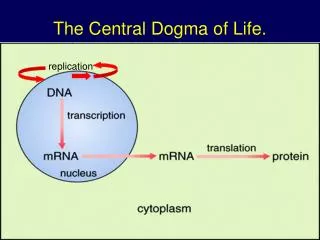
DNA Transcription mRNA Ribosome Translation Protein DNA RNA Protein Prokaryotic Cell
DNA RNA Protein So, DNA is like a recipe… RNA is like a copy of the recipe… Protein is what is being made…the cookies!
What if the recipe for Grandma’s famous cookies called for 1 teaspoon of salt… But when I copied the recipe, I wrote 1 cup of salt?
So, if the recipe gets changed…the cookies will get changed. It’s the same with DNA! If the original DNA is changed, the protein may be changed!
Is a change in the recipe, always a bad thing? Some DNA mutations are beneficial! Remember, DNA codes for proteins that determine traits!
What is a MUTATION? A change in DNA
What causes MUTATIONS? They happen all the time when DNA is copied! Thankfully, DNA polymerase proofreads and fixes these changes.
What causes MUTATIONS? Mutagens are things that cause mutation.
Examples of mutagens… • UV light (from sun or tanning beds) • X-ray exposure • Radioactivity • Chemicals (ex: cigarette smoke)
We will look at 3 types of DNA mutation. Remember, mutations are changes to DNA…that can then affect RNA…which can then affect a protein!
THE CAT ATE THE RAT THE BAT ATE THE RAT Now look at the next sentence…do you see what’s been changed? SHHHH! Don’t tell!
THE CAT ATE THE RAT THE BAT ATE THE RAT
1. SUBSTITUTION • Change 1 DNA nucleotide • Can change 1 amino acid in the protein • May have no affect
UGU Cysteine UGG DNA: ACA mRNA: AA: DNA: ACC mRNA: AA: DNA: ACT mRNA: AA: DNA: ACG mRNA: AA: Tryptophan UGA Stop UGC Cysteine
What’s the point? • Because of the repitition of the code, sometimes you can make a substitution and it still codes for the same amino acid. Other times, it changes the amino acid. If it changes it to a “stop”, then that’s a pretty big change
THE CAT ATE THE RAT THE CAT TET HER AT Now look at the next sentence…do you see what’s been changed? SHHHH! Don’t tell!
THE CAT ATE THE RAT THE CAT _TET HER AT
2. DELETION • Delete 1 or more DNA nucleotides • Shifts the nucleotides = a frameshift mutation • Changes the protein down from the mutation
THE CAT ATE THE RAT THE CAT TAT ETH ERA T Now look at the next sentence…do you see what’s been changed? SHHHH! Don’t tell!
THE CAT ATE THE RAT THE CAT TAT ETH ERA T
3. INSERTION • Add 1 or more DNA nucleotides • Shifts the nucleotides = a frameshift mutation • Changes the protein down from the mutation
If I spend a lot of time in the sun and the DNA in one of my skin cells gets a mutation… I may get skin cancer… But would/could I pass this to a child? Only mutations in sex cells (egg or sperm) are passed to offspring!
That’s why when you have x-rays done, the technicians put a lead drape over your “reproductive zone” – they don’t want to mutate your eggs/sperm!!!
Links • Sickle cell anemia: http://www.pbs.org/wgbh/evolution/library/01/2/l_012_02.html • Tay Sacs: http://www.pbs.org/wgbh/nova/programs/ht/qt/2809_qlg_03.html • Cystic Fibrosis: http://www.pbs.org/wgbh/nova/programs/ht/qt/2809_qlg_03.html • http://www.ornl.gov/sci/techresources/Human_Genome/posters/chromosome/cftr.shtml