Download
1 / 1
10 likes | 114 Vues
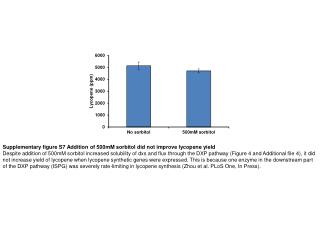
The addition of 500mM sorbitol increased the solubility of DXS and enhanced flux through the DXP pathway, but it did not improve the yield of lycopene when lycopene synthetic genes were expressed. The limitation was identified as a bottleneck at the ISPG enzyme in the downstream part of the DXP pathway, which severely restricted lycopene synthesis. This finding emphasizes the importance of specific enzyme activities in metabolic engineering for carotenoid production.

E N D
Supplementary figure S7 Addition of 500mM sorbitol did not improve lycopene yield Despite addition of 500mM sorbitol increased solubility of dxs and flux through the DXP pathway (Figure 4 and Additional file 4), it did not increase yield of lycopene when lycopene synthetic genes were expressed. This is because one enzyme in the downstream part of the DXP pathway (ISPG) was severely rate-limiting in lycopene synthesis (Zhou et al. PLoS One, In Press).