Download

1 / 9
90 likes | 207 Vues
The Market Revolution marked a pivotal shift in the U.S. economy, driven by technological advancements and globalization. Specialization emerged as farmers focused on specific crops, leading to urban migration and the rise of factory jobs. This era saw the entrepreneurial spirit flourish, with inventors like Charles Goodyear and John Deere revolutionizing industries. Communication and transportation improvements, such as the telegraph and railroads, linked regional economies and facilitated international trade. Cotton became a dominant export, entrenching the slave system, while falling prices empowered workers as consumers.

E N D
Main Idea • Why it Matters Now The Market Revolution The linking of markets continues today, as new technologies are opening the US to globalized trade.
US Markets Expand • The rise of industry had fundamentally changed the lives of workers and consumers. Instead of being self-sufficient, farmers focused on specialization • Specialization – • Market Revolution – • Migration into urban center (for factory jobs) makes people less self-sufficient • Free Enterprise –
Economics • Capitalism– • Means of production include factories, machines, farms • Supply- • Demand- • Economy grew more in 1840s than in the previous 40 years combined
The Entrepreneurial Spirit • Entrepreneurs – • Charles Goodyear created vulcanized rubber, able to stay tough and elastic in extreme hot/cold. Not profitable until creation of automobiles in the 1920’s. • Sewing Machine, Foot treadle produced clothing faster and cheaper • John Deere – • Cyrus McCormick – • Manufactured items grew less expensive as technology advances lowered production cost • Falling prices meant that workers became regular consumers. They began to buy goods out of comfort instead of necessity
Improvements in Communication • Samuel Morse – • Telegraph –
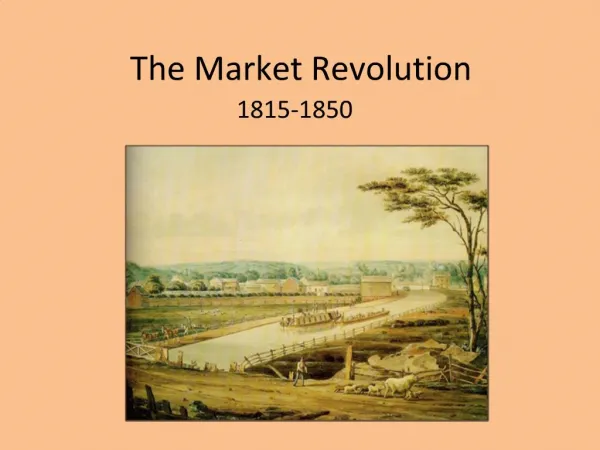
Improvements in Transportation • Transportation kept up with increasing shipping demands, with emergence of railroads, steamboats and canals • Canals and steamboats allowed more goods to be carried faster and cheaper • 1816: 100 miles of canals • 1840: 3,300 miles • Railroad transportation revolutionizes shipping industry
Cotton is King • Growing links between America’s regions contributed to the development of regional specialties • 1 • 2 • 3 • Canals, railroads and improved traditional roads reduced the price of shipping and linked the country’s interior ports to international ports (like NYC) • As a result, the South begins to sell cotton to Great Britain • Slave system becomes further entrenched with giant profits for cotton planters