Download
1 / 12
120 likes | 280 Vues
This study guide delves into the intricate details of blood and its components. It covers red blood cells (RBCs) and their unique structure, including their biconcave shape and the presence of hemoglobin, which allows them to effectively carry oxygen. Additionally, it explores two key types of white blood cells: lymphocytes and monocytes, detailing their roles in immunity and infection fighting. The composition of blood plasma is also discussed, highlighting its functions as a transport medium. This guide provides learning objectives and checks for students to evaluate their understanding.

E N D
First revise 3.2.2(Basic details about blood and blood cells) HL & OL
Learning objectives 1. Details of red blood cell structure &function • Details of two types of white blood cells • (a) Lymphocytes • (b) Monocytes
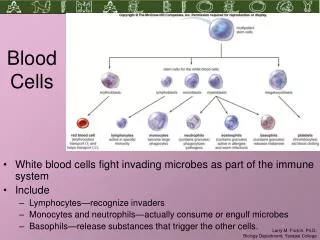
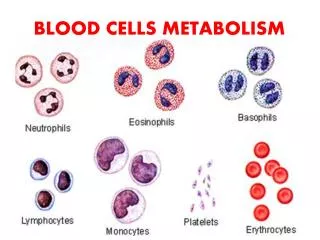
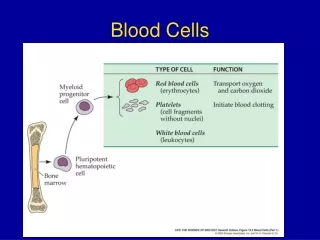
Composition of Blood Plasma Liquid part of the blood Red Blood Cells White Blood Cells Platelets
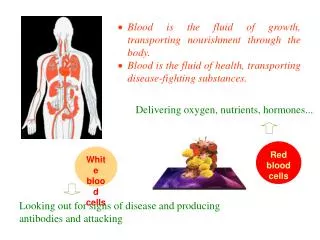
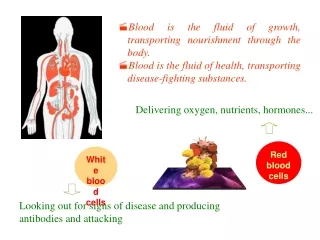
Functions of blood parts Plasma Composed of mainly water which acts as a transport medium for the cells and dissolved substances Carry Oxygen Red Blood Cells Fight Infection White Blood Cells Platelets Clotting
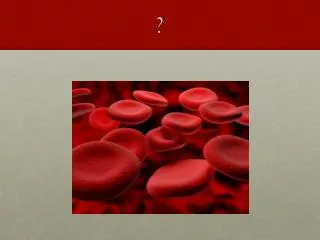
Red Blood Cells Biconcave discs ……gives large surface area No Nucleus No mitochondria Contain Haemoglobin…(has a high affinity for oxygen) Flexible Cell membranes Made in bone marrow of ribs & sternum
White Blood Cells Have a Nucleus No definite shape Formed in bone marrow and mature in spleen Protect against disease Two types 1. Lymphocytes Produce antibodies 2. Monocytes Engulf microorganisms
PLATELETS Cell fragments No nucleus Made in bone marrow Function in clotting
Plasma Composed of mainly water which as a transport medium for the cells and dissolved substances Dissolved substances include Digestion products ….Glucose, amno acids, Fatty acids, glycerol, minerals and vitamins Waste….Carbon dioxide, urea Hormones….eg Insulin Antibodies
Learning check 1. List four ways, other than colour, in which red blood cells are different from ordinary body cells 2. Name the chemical in red blood cells that has a high affinity for oxygen 3. Name two types of white blood cells and give the function of each type
See also Section 3.2.2 Organisational Complexity of the Human for introduction to Blood and ciriculation