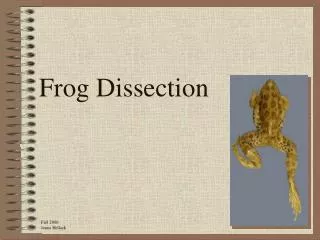
Frog Dissection
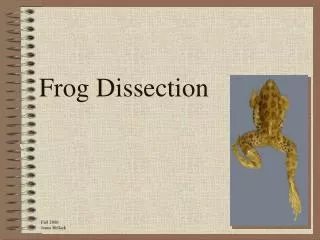
Learn about the intricate anatomy of the frog through dissection, focusing on key structures such as the mouth, eyes, ears, and internal organs. Explore how the nictitating membrane protects the eyes, the role of tympanic and Eustachian tubes in hearing and pressure equalization, and the unique dental structure used for capturing prey. We will also cover the digestive, circulatory, and respiratory systems, including the heart's chambers, lungs, liver, and kidneys, highlighting their functions and importance in the frog's physiology.

Frog Dissection
E N D
Presentation Transcript
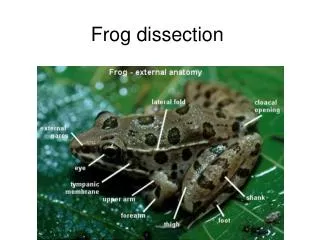
The mouth, nostrils, and eyes • 1. Nictictating membrane- • Protects eyes (similar to an eyelid) • 2.Tympanic membrane – the ear drum • Collects sound waves • Allows frogs to hear in water 2
1. Maxillary Teeth – (along inner edge of upper jaw) 3. Vomerine Teeth – (roof of mouth) Teeth are used to hold onto caught prey, do not use them to chew, they swallow prey whole!! 6. Opening to Eustachian tubes 2. internal Nares 8 Glottis Examine the Mouth
10.Internal Nares –internal nostril openings on either side of the vomerine teeth. • 11.Eustachian tube openings –connenct mouth cavity and the tympanic membrane • Help to equalize internal ear pressure • If the frog is male, these are near the openings to the vocal sacs which allow male frogs to make sounds • 50.Vomerine teeth
Internal Structure -Female • 31.Eggs • 32.Oviduct – tubes which carry the eggs after they have been made
22 – Eggs 18 – Liver – 3 lobed structure that produces bile for lipid digestion and starch Food does not pass through, but blood does Still considered as part of digestive system 9- Stomach 6 – Ventricle of heart 12 – small intestine
The Heart – 3 chambered structure • 34.Conus arteriosus • 35.Atrium • 36.Ventricle
Heart – Circulatory System • 1. Ventricle • 2. Right atrium • 3. Left atrium • 4. Sinus venosus • Triangular sac underneath the heart • Veins from all over the body empty here before going into the right atrium • Part of circulatory system
The Lungs • Lungs • 2 sac like structures on either side of the heart • Collect oxygen from air and transfer it to blood supply • Part of respiratory system
Digestive system • 16.Small intestine • At lower end of the stomach • Breaks soupy mixture from stomach into usable nutrients using bile from liver and enzymes from the pancreas • 17.Liver - • 18.Large intestine • Collects waste from tissues and wastes that could not be absorbed by the small intestine. • 19.Stomach – secretes digestive juices to break down whole food swallowed by the frog into a soupy mixture
26.Spleen –filters improperly functioning blood cells; circulatory system • 29.Teste
Digestive system • 16.Small intestine • 19.Stomach • 33.Gall bladder
11- Pylorus- muscular valve between the stomach and small intestine
23 – KidneyLocated in either side of the spine, near the dorsal side; filter blood and urine that drains into the urinary bladder; excretory system
23 & 24 Kidneys • 21 – Fat Bodies • 27 – Urinary Bladder • urine travels from the kidneys, down tubes called ureters to this bladder where it is stored until emptied through the cloaca.
21 – Fat Bodies • Attached near kidneys • Store fat for nourishment for the gametes • Much larger and more abundant in females • 22-Testes • Small, oval structure underneath kidneys • Sperm travels through the kidneys, down the ureters and out the cloaca. • 23 & 24 Kidneys