Understanding the Nucleus: DNA, Chromosomes, and Cell Division
80 likes | 218 Vues
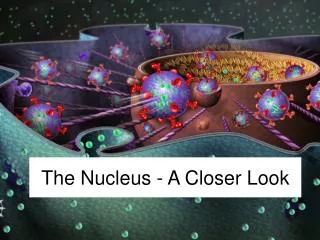
Dive into the essential role of the nucleus in cellular function, where genetic material is contained and organized. The nucleus houses DNA (deoxyribonucleic acid) in the form of chromatin, allowing genes to be accessed for cellular instructions. As cells prepare to divide, DNA coils into chromosomes, ensuring that each new cell receives accurate genetic copies. This educational overview includes important vocabulary like nucleus, DNA, and sister chromatids, crucial for understanding genetics and the life cycle of cells.


Understanding the Nucleus: DNA, Chromosomes, and Cell Division
E N D
Presentation Transcript
Page 10 • Before you read page 10 look at the pictures. What do they make you think about? What questions come to mind? • Read over the three paragraphs o n page 10. • Identify the important vocabulary words • Write them on a scrap piece of paper
The nucleus contains the genetic material of the cell. This genetic material is called DNA (deoxyribonucleic acid). DNA exists in pieces called chromosomes. The chromosomes contain segments called genes. Each gene contains coded instructions for how to build something or do something within the cell.
During most of the life of the cell the DNA exists in a form called chromatin. This is the long un-coiled form of the chromosome. Think of a long piece of string. The genes on the chromosome must be accessible so the cell can read the instructions. When it is time to divide the cell coils up the DNA into a structure called a chromosome. This process of coiling up helps to prevent tangles and breakages.
The chromosome appears as two strands because the cell has made a copy of each chromosome in preparation for division – each new cell will get one copy. When the two copies of a chromosome are connected by a centromere they are called sister chromatids. When the cell divides the copies (chromatids) will be pulled apart and each becomes a single stranded chromosome in the new cell.
Vocabulary for Study Cards • Nucleus • DNA • Chromosomes • Genes • Chromatin • Centromere • Sister chromatids • Chromatid