The Transformation of NPR: Internet Streaming and Listener Empowerment
20 likes | 133 Vues
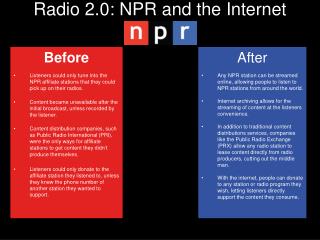
Before the rise of the internet, NPR listeners were limited to local affiliate stations and had restricted access to content, which became unavailable after initial broadcasts unless recorded. However, the internet revolutionized this landscape by enabling streaming of any NPR station worldwide, allowing for convenient access and archiving of content. Additionally, organizations like Public Radio Exchange (PRX) streamlined the content leasing process, empowering listeners to support any station or program directly, thus enhancing their connection with public radio like never before.


The Transformation of NPR: Internet Streaming and Listener Empowerment
E N D
Presentation Transcript
Radio 2.0: NPR and the Internet • Before • Listeners could only tune into the NPR affiliate stations that they could pick up on their radios. • Content became unavailable after the initial broadcast, unless recorded by the listener. • Content distribution companies, such as Public Radio International (PRI), were the only ways for affiliate stations to get content they didn’t produce themselves. • Listeners could only donate to the affiliate station they listened to, unless they knew the phone number of another station they wanted to support. • After • Any NPR station can be streamed online, allowing people to listen to NPR stations from around the world. • Internet archiving allows for the streaming of content at the listeners convenience. • In addition to traditional content distributions services, companies like the Public Radio Exchange (PRX) allow any radio station to lease content directly from radio producers, cutting out the middle man. • With the internet, people can donate to any station or radio program they wish, letting listeners directly support the content they consume.