
First Aid
E N D
Presentation Transcript
Guidelines for First Aid Check the Scene and the Victim • Assess the situation and any immediate dangers to you or the victim. Never put your own safety at risk. • Determine whether or not the individual is conscious. • Send someone for help-call 911 • Check if the victim is breathing. • Treat not breathing, no pulse or severe bleeding first. • Examine the individual from head to toe. • Do not stop after finding one injury. • Look for medical alert tag around wrist, neck or ankle.
Guidelines for First Aid Call the emergency Number or send someone to call • Speak slowly and clearly • Identify yourself and the phone number from which you are calling • Give exact location • Describe what has happened; essential details about the victim(s), the situation and any treatments given. • Ask for advice • Hang up last, let the person on the other end hang up first, to make sure they have all the information they need.
Guidelines for First Aid • Also Call if there is • A fire or explosion • A downed electrical wire • Swiftly moving or rapidly rising water • Poisonous gas present • A vehicle collision When to Call 911-call if the victim • Victim is or becomes unconscious • Has trouble breathing • Has persistent chest pain or pressure • Is bleeding severely • Has persistent pin or pressure in the abdomen • Is vomiting • has seizures, slurred speech, or persistent severe headache. • appears to have been poisoned • Has injuries to the head, neck or back • Has possible broken bones.
Guidelines for First Aid Give Care • Monitor the person’s condition. • Watch for changes in the person’s breathing and consciousness. • Give care until help arrives. • Do not move the person unless there are nearby dangers, such as, fire, poisonous gasses, or downed power lines • Help the person rest comfortably • Keep the person from getting overheated or chilled.
Choking Victim • The Heimlich Maneuver is used when the victim is conscious and choking, but cannot breath, speak or cough. • Stand Behind Victim with arms around chest • Place one fist under the sternum, between the ribs. • Cover with other hand • Use quick upward abdominal thrusts.
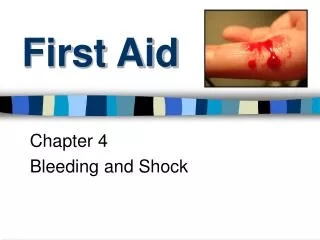
Severe Bleeding • Severe bleeding or Hemorrhage, can result in shock and death if not treated promptly. • Try to prevent direct contact with the blood if possible to decrease the chance of transmitting infectious diseases. • Apply Pressure against the would with a dressing. • Apply bandage snuggly by overlapping gauze rolls. Pressure Bandage. • If bleeding does not stop, apply pressure to the pressure point, an artery near the skin surface that passes over a bone.
Internal Bleeding Signs of internal bleeding • Pain, although there may be no sign of injury • Symptoms of shock • paleness, cold and clammy skin, rapid but weak pulse, thirst, nausea, and vomiting. • Keep person calm and lying down • Call 911 • Turn sideways if vomiting.
Types of Fractures Fracture; a break or crack in the bone Closed Fracture; the bone ins broken, but does not push through the skin Open Fracture; when the end of a broken bone pierces the skin.
How to treat Fractures • If fracture is open, stop the bleeding. • Use dressings • Apply pressure around the bone end that is piercing the skin • DO NOT put pressure directly on the bone. • DO NOT attempt to push the bone back in. • Immobilize the injured area • Support fracture site between hands and do not move individual, unless it is essential. • Important not to move victim if there is a spinal injury.
How to treat Fractures • Splint; is any rigid material that is used to keep the injured part form moving. Splints can be rigid, soft, or anatomic. • Boards, folded newspaper, a pillow, a folded blanket or towel. • An anatomic splint involves using another part of the body to immobilize an injured part. Like taping two fingers together.
Sprains and Strains • Sprain is when ligaments or tendons near a joint are torn or stretched. • Ligaments are fibrous bands of tissue that prevent the bones from popping apart at a joint. • Tendons are thick strands of tissue that connect muscles to bones. • Signs and symptoms; pain on movement, swelling and discoloration • Strain is overstretching a muscle or tendon. • Signs and symptoms; intense pain, slight swelling and difficulty moving or using the affected part.
Care for Sprains and Strains Sprains • Apply cold packs to the area • Elevate the injured part • Do not use or walk on the injured part if doing so causes pain. Strains • Rest the injured part • fore a back strain, apply moist heat. For other strains, elevate the injured area and apply cold packs. • Get medical help, especially if pain persists.
Dislocation • Dislocation is a separation of the bone from its joint. • Common signs are; deformity, pain, and loss of function. • How to Treat • DO NOT try to set the joint. Immobilize and support the affected part, as I the treatment for a fracture. • Apply cold packs to the injury to keep swelling down. • Seek immediate medial attention.
Burns • First-Degree Burns are surface burns in which the outer layer of the skin is reddened and painful. • Second-Degree Burns extend through the outer layer of the skin, causing blisters and reddening. • Third-Degree Burns damage all the layers of the skin and the tissues underneath. These burns may look gray or charred.
Apply cool water to burned area until the pain decreases. • For small burns that blister, immerse in cool water then cover with a clean dressing to prevent infection. • Do NOT break any blisters.
Treating Severe Burns • SEEK MEDICAL ATTENTION • Stop the burning • For a long as 15 minutes, cool the burn with lots of cool water. • Place a clean, dry dressing over the burned area. A clean sheet may be used as a dressing. • Do not try to remove pieces of clothing stuck to burn. • Do not clean burned area. • Do not put any ointment or medication on the burn. • Monitor the person until the ambulance arrives.
Treating Chemical Burns • SEEK MEDICAL ATTENTION • Have victim remove clothing that has had the chemical spilled on it. • Flush the skin with cool water for at least 15 minutes, or until the ambulance arrives • Call a poison control center or a doctor for specific instruction son how to treat the burn. • If chemicals get in the eyes, flush with water for 15 minutes, holding the eye open. Then cover with clean , dry dressing.
Electrical Shock Electrical shock is when an electrical current passes through the body. • Stay a safe distance and call 911 immediately • DO NOT touch a person who is in contact with an electrical current. The current will pass to you. • If the main switch is nearby, turn it off • After you have turned off the current, start rescue breathing or CPR • Cover the burned area with a clean, dry dressing.
Convulsions Convulsions are alternating periods of severe muscular contractions and relaxation. • Steps for Treating Convulsions • Call 911 • Protect the victim form injury, by moving harmful items away. • Do not restrain the victim. Do not put anything into the victims mouth. • Watch the breathing • If the victim is unconscious after the convulsions have ended, turn on one side and let the victim res.
Punctures with a foreign object • Treating punctures with a foreign object • DO NOT remove the object • Immobilize the area and the object. • Seek immediate medical help.
Head Injuries • Most head wounds, even minor ones, bleed heavily because of the large number of blood vessels in the head. Stop the bleeding as soon as possible. Treatment • If there is no sign of serious head or spine injury, elevate the victim’s head and shoulders. Otherwise, leave the victim laying flat. • Apply a dressing directly to the wound. • Get medical help.
Drowning • To help victim by throwing them a rescue aid, such as • Floatation device • Reach with a stick or boat oar • DO NOT try to swim out and get them, no matter how good of a swimmer you are. • Call 911 and begin rescue breathing, if needed. • Caution, most drowning victims will vomit when rescue breathing is administered.
Frostbite Frostbite is the freezing of body tissue after being exposed to cold temperatures for some period of time. Treatment • Cover or wrap area with blanket or clothing. Keep it dry. • Bring person indoors if possible. • DO NOT massage or rub area. Immerse in warm, NOT hot, water and gradually warm. Do not permit individual to stand or sit near a stove, radiator or fire. • When area becomes flush, discontinue warming. Apply dry, clean bandages over area. If it is the feet, do not let victim walk. Otherwise, elevate and exercise area. • Seek medical Attention.
Hypothermia Hypothermia is a serious loss of body heat that causes the body temperature to fall well below normal. Signs and Symptoms • Shivering, slurred speech, muscular weakness, drowsiness, and hallucinations. Condition Can be Fatal. Treatment • Check breathing and heartbeat, use CPR if necessary. • Call 911 or send for medical help • Bring into warm room. Remove wet clothing and dry the individual. • Warm the person slowly using hot-water bottles covered in towels or warm blankets. If the person is conscious, give them warm liquids that DO NOT contain caffeine or alcohol. • Monitor condition until help arrives.
Heat Exhaustion Heat exhaustion occurs when a person is exposed to excessive heat over a period of time. • It is caused by the loss of water and salt from the body through excessive perspiration. Symptoms • Headache, heavy sweating, weakness, dizziness, and muscle cramps. Skin may become pale and clammy. Treatment • Move to a cool, shaded area • Loosen or remove wet clothes • Cool the victim with cool, wet cloths and fanning. • Give glass of cool water to sip. • Take to the ER if individual becomes nauseated, vomit, or lose consciousness.
Heatstroke Heatstroke is a due to prolonged exposure to high heat, it is also known as sunstroke. Symptoms • Lack of perspiration. High body temperature, reddened skin, and changes in consciousness. • Unconsciousness may come on suddenly or may be preceded by headache, dizziness, rapid pulse, nausea, vomiting and mental confusion. Treatment • Call 911 immediately • Move person into shaded area and remove excess clothing. • Place individual into tub of cool water or place cold clothes around neck, groin and under armpits. • Monitor condition, if skin cools and regains normal color, discontinue cooling.