Download
1 / 24
240 likes | 367 Vues
Carbohydrates are essential for our bodies, providing energy, vitamins, minerals, and fiber. They are categorized into simple carbohydrates (sugars) and complex carbohydrates (starches and fiber). Simple sugars such as glucose and fructose are easily absorbed, while complex carbs, found in grains and vegetables, take longer to digest. Fiber plays a crucial role in digestion, assists in regulating blood sugar, and may help lower cholesterol levels. Recommended daily intake emphasizes choosing healthier carbohydrate sources to promote overall health and wellness.

E N D
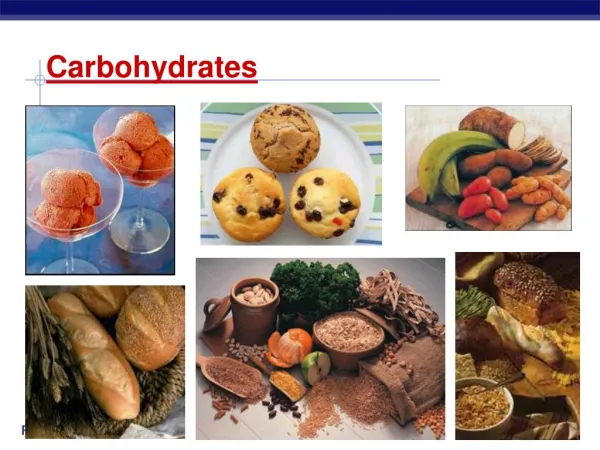
Carbohydrates • What is the first thing that comes to mind? • Carbohydrates: • Supply energy, vitamins, minerals, fiber and phytochemicals • However, they are not all created equal.
Chemical Structure • http://science9.files.wordpress.com/2007/04/diabetes-glucose.gif
Carbohydrate Types • Simple (sugars) • Complex (starches and fiber)
Simple Sugars • Monosaccharides • Glucose • AKA: Dextrose • The most abundant • Supplies energy to cells • Fructose • AKA: levulose or fruit sugar • Galactose • Found in lactose
Simple Sugars • Disaccharides • Sucrose • AKA: Table sugar • May be highly refined • Made up of one glucose and one fructose • Lactose • Milk sugar • Made up of one glucose and one galactose • Maltose • Made up of two glucose molecules
Simple Sugars • Found in honey, jam, jelly, syrup, table sugar and some fruits • Measured in the blood
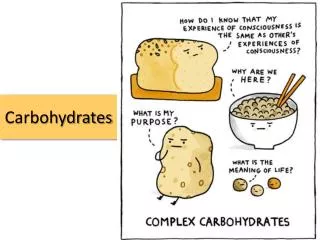
Complex carbohydrates • Known as starches, fiber • Made up of 100’s to 1000’s of simple sugars • Found in grains, pastas, breads, cereals, legumes and vegetables
Carbohydrate Digestion and Absorption • Travels with carbohydrate
Recommended Amounts • Carbohydrates should be the bulk of daily diet. • 45-65% of diet • For 2,000 calorie/day diet = 300 grams (or 60%) • BUT, choose them wisely • Example: wheat bread vs whole wheat bread
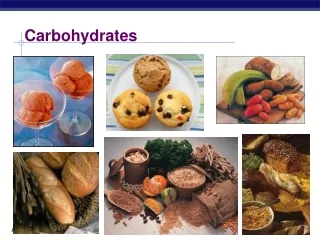
Food & Carbohydrates • The Good, The Bad & The Ugly • What foods contain carbohydrates? • Which are better than others? • What changes might you make in your own diet?
Health Benefits • Promotes healthy digestive system • May lower blood sugar levels • Lowers cholesterol • Cancer prevention?
What is Fiber? • A complex carbohydrate that the body can neither digest nor absorb. • Not considered a nutrient • Still has an important role in nutrition • Two types of fiber • Soluble • Insoluble
Insoluble Fiber • “Roughage” • Promotes regularity • Adds bulk • Decreases the time that food spends in the intestines • Examples: wheat bran, whole-grains, vegetables, fruits
Soluble Fiber • Dissolves in water or other liquids. • As it passes through the intestines, it forms a gel • Promotes waste removal.
Fiber & Your Intestines • Fiber is your friend! • Relieves and prevents constipation • Wheat bran and oat bran are the most effective • Start slowly though!
Fiber & cholesterol • Fiber binds with cholesterol to help remove it from your system. • Less absorption = decrease in cholesterol level • This in turn, reduces risk of heart disease. • Those who had a high intake of fiber had 40% lower risk of coronary heart disease (Harvard Study) • Cereal with high fiber (grains) seemed the most beneficial. • FDA approved claim: “May reduce the risk of heart disease.”
Fiber & Diabetes (Type II) • Fiber helps regulate blood sugar levels • Slows emptying of the stomach which results in slower release of sugar to the blood. • Glycemic Index: • Measures how quickly food is turned into glucose. • Low glycemic foods cause the least “spike” in blood sugar. • However, there are flaws in the glycemic index.
Fiber & Weight Loss • Fiber may help promote weight loss: • Less likely to overeat • Makes a meal larger • Consume fewer calories for the same volume of food • People tend to eat slower • Stay full longer
Recommendations • 25 grams a day are recommended • Americans do not eat enough fiber. • How do you add fiber to your diet:
Adding fiber to your diet • Start slow! • Drink water – helps with digestion. • Recommended: water, no or low-calorie beverages (unsweetened tea, diet soda) • Eat whole fruits instead of juices • Replace refined grains with whole-grains • Replace meats with legumes • Experiment!
Fiber & Food labels • High fiber: • Must have 5 or more grams per serving. • Good source of fiber: • 2.5 – 4.9 grams / serving • More or added fiber: • At least 2.5 grams / serving • “Whole-wheat” • Does not always mean whole grain
Fiber Supplements • Whole foods are generally always better • Check with your doctor before using • Examples: Metamucil, Citrucel, FiberCon • Fiber supplements: • May decrease effectiveness of some medications