Memory Bias in Spider-Fearful Individuals: Evidence from Change Detection Tasks
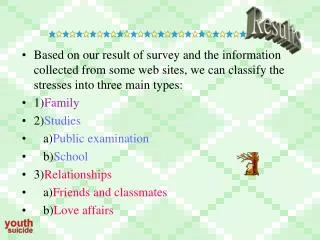
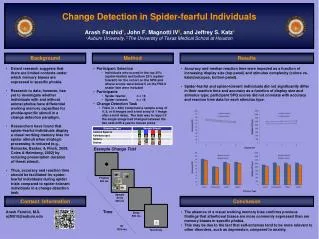
This study investigates the change detection capabilities of spider-fearful versus spider-tolerant individuals within a memory paradigm. Participants categorized as spider-fearful (n=16) and spider-tolerant (n=16) completed trials involving a series of image arrays, assessing their ability to detect changes in an image after a brief delay. Findings reveal no significant differences in reaction time and accuracy between groups relative to display size and stimulus complexity. This suggests that attentional biases are more prominent than memory biases in specific phobias, reaffirming the complexity of fear-related cognitive processes.

Memory Bias in Spider-Fearful Individuals: Evidence from Change Detection Tasks
E N D
Presentation Transcript
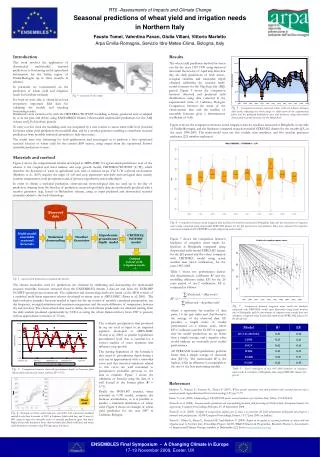
Change Detection in Spider-fearful IndividualsArash Farshid1, John F. Magnotti IV2, and Jeffrey S. Katz11Auburn University, 2The University of Texas Medical School at Houston Fixation 400 ms Sample Array 500 ms Delay 900 ms Test Array Background Method Results • Participant Selection • Individuals who scored in the top 25% (spider-fearful) and bottom 25% (spider-tolerant) for the cohort on the SPQ and whose scores were below 5 on the FSS-II snake item were included • Participants • Spider-fearful: n = 16 • Spider-tolerant: n = 16 • Change Detection Task • Trials (n = 480) comprised a sample array of 4, 5, or 6 images and a test array of 1 image after a brief delay. The task was to report if the single image had changed between the two sets with a yes/no mouse press • Extant research suggests that there are limited contexts under which memory biases are expressed in specific phobia. • Research to date, however, has yet to investigate whether individuals with and without animal phobia have differential working memory capacities for phobia-specific stimuli in a change detection paradigm. • Researchers have found that spider-fearful individuals display a visual working memory bias for spider stimuli when strategic processing is reduced (e.g., Reinecke, Becker, & Rinck, 2009; Coles & Heimberg, 2002) by reducing presentation duration of threat stimuli. • Thus, accuracy and reaction time should be facilitated for spider-fearful individuals during spider trials compared to spider-tolerant individuals in a change detection task. • Accuracy and median reaction time were impeded as a function of increasing display size (top panel) and stimulus complexity (colors vs. kaleidoscopes; bottom panel). • Spider-fearful and spider-tolerant individuals did not significantly differ in their reaction time and accuracy as a function of display size and stimulus type; participant SPQ scores did not correlate with accuracy and reaction time data for each stimulus type. • Example Change Trial Display Size Stimulus Type Contact Information Conclusion Time • The absence of a visual working memory bias confirms previous findings that attentional biases are more commonly expressed than are memory biases in specific phobia. • This may be due to the fact that self-schemas tend to be more relevant to other disorders, such as depression, compared to anxiety. Arash Farshid, M.S. azf0010@auburn.edu ITI 1200 ms