Articles of Confederation
This article explores the Articles of Confederation, the first governing document of the United States, created during a time of intense debate about identity and government. It outlines how the Continental Congress operated from 1775 to 1781, emphasizing the lack of federal power, including the inability to levy taxes and enforce laws. The concept of state sovereignty prevailed, as individuals identified more with their states than a national government. Key events, like Shays' Rebellion and the Newburgh Conspiracy, highlight the challenges faced under this "League of Friendship."

Articles of Confederation
E N D
Presentation Transcript
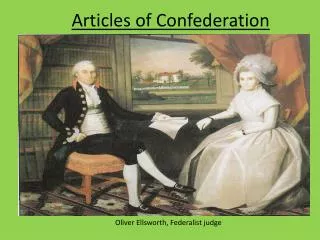
Articles of Confederation Oliver Ellsworth, Federalist judge
What type of government was this? • Confusion about American vs. British identity • 1775 – 1781 = Continental Congress was main body of government • Anger about Parliament: Less government is better
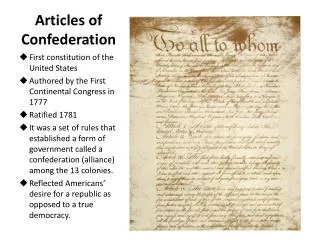
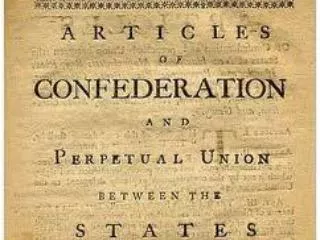
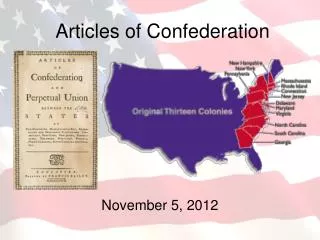
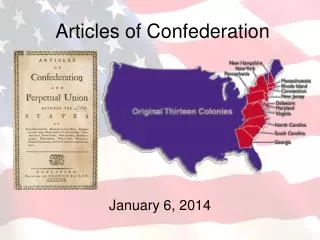
Articles of Confederation • November 1777 = 13 states agreed to it • “League of Friendship” • 2 – 7 state delegates met in congress and had 1 vote per state • Not allowed to tax people • Could not force states to give them money
State Identities • States were more powerful than the national congress • People defined themselves by their state
Republicanism • Popular elections • Belief that leaders represented the people & put their own interest of the people before their own • Believed government looked out for the interests of the people
Who were the “people”? • Maryland voters needed 50 acres of land or 30 dollars • Pennsylvania voters needed property • 1776 – 1807 = Only New Jersey allowed free blacks and women with property
Problems of the Confederation • National debt was $42 million & state debts were $25 million • Tasks = Paying war debt Relations with Indians Settle Western Frontier
Newburgh Conspiracy • 1783 = Officers plotted military coup in order to get paid • Washington helped Congress agree to give full pension of 5 years or ½ pay for life
Western Lands • 7 states claimed Western areas • Small states wanted government to sell land to pay war debt • Northwest Ordinance of 1787 = Created territories out West
Shay’s Rebellion • September 1786 • Massachusetts farmers protested when land was foreclosed because of taxes • 1,100 farmers in revolt • Massachusetts militia refused to suppress them Daniel Shays, from a Boston Almanac, 1787