IVDR Class A
E N D
Presentation Transcript
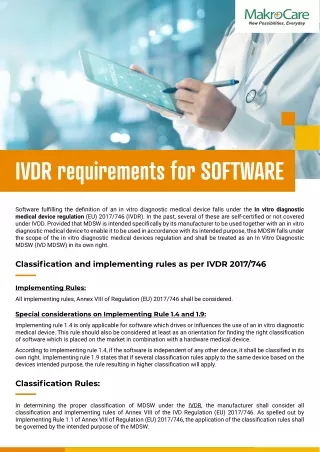
IVDR Class A Explained: What Manufacturers Must Know When I first heard about IVDR Class A, I thought it was just another set of rules that big labs and manufacturers pretend to care about. Turns out, it’s actually kind of important if you don’t want your medical device dreams to hit a regulatory wall. Honestly, I’ve seen companies assume “we’ll deal with it later” and then panic when they realize their products aren’t compliant. That’s where understanding IVDR Class A properly can save you a lot of headaches—and maybe a few sleepless nights. The thing about IVDR Class A is that it’s the lowest risk category for in-vitro diagnostic devices, but don’t let “low risk” fool you. You still have obligations. Think of it like riding a bicycle without training wheels for the first time. You might think you can just coast, but if you ignore safety checks, you’re probably going to fall. That’s why manufacturers need a solid understanding, because skipping the small steps can snowball into bigger compliance problems. Why Some Manufacturers Underestimate IVDR Class A
I’ve noticed a lot of chatter online, especially on LinkedIn and Reddit, where lab managers joke about “Class A is nothing, it’s just paperwork.” And while it’s true that Class A doesn’t demand the same clinical evidence as higher classes, underestimating the documentation or quality management part is a classic rookie mistake. The regulators aren’t going to care that you think it’s easy. If your device slips through the cracks, the fines, recalls, or just the administrative mess can be brutal. A little-known fact is that even small in-vitro devices get flagged not because they’re dangerous, but because the labeling or technical documentation is incomplete. I remember talking to a friend who works in a mid-sized diagnostic company—they spent weeks fixing tiny gaps in documentation that they swore were “irrelevant.” Lesson learned: regulators love details more than your optimism. What Manufacturers Actually Need to Focus On So what’s the real meat of IVDR Class A compliance? First, your technical documentation has to be in order. That includes device description, intended use, risk management, and labeling. Imagine it like prepping for a baking competition. You can have the best cake in the world, but if your recipe notes are messy or missing steps, the judges will ding you anyway. Documentation is your recipe for passing the regulatory taste test. Then there’s risk management. Even though Class A is low risk, you can’t ignore it. A minor mislabeling could confuse a technician, which might lead to wrong test results. Not catastrophic, but enough for the regulator to take notice. Think of it like leaving a banana peel on a hallway floor—it’s small, but someone’s going to slip eventually. Manufacturers also need a quality management system in place. It doesn’t have to be over the top, but something consistent that tracks production, complaints, and internal audits. Skipping this step is like trying to drive in a new city without Google Maps— you might eventually get where you want, but the detours and wrong turns will cost you. Common Misconceptions About Compliance I’ve read comments from some small diagnostics companies who assume IVDR Class A won’t apply to them because they don’t sell internationally. Reality check: If you want to expand later, having IVDR Class A compliance from day one is like building your house on a solid foundation. It’s less fun now, but saves you from tearing down walls later. There’s also the assumption that software or digital tools are exempt if your device is simple. Nope. The EU regulators are pretty clear that if your software interacts with the device or interprets results, it counts. One wrong interpretation and suddenly you’re in hot water. That’s why a good IVDR Class A strategy includes documentation for software, even if it seems minor. Real-Life Lessons From the Field
I remember visiting a small lab a few months back. They were so focused on the device itself that they completely ignored labeling updates. Regulators came in, spotted the mismatch, and it caused weeks of corrective action. The lab manager’s reaction was hilarious—part panic, part “why didn’t anyone tell me?” But it’s a perfect example of why compliance isn’t just technical—it’s human. Mistakes happen, but you can anticipate them with a little preparation. Why Keeping Up With IVDR Matters Even if Class A seems easy now, the regulatory landscape is shifting. EU authorities are slowly tightening expectations, and social media buzz shows that companies who ignore updates get called out fast. Twitter threads in particular highlight recalls and warnings that spread quickly. No one wants their device to trend for the wrong reason. Staying proactive is basically your safety net. How to Get Started Without Losing Your Mind Start by reviewing your technical documentation, labeling, and risk management. Map out gaps, then prioritize fixes. You don’t need a huge team to manage it; sometimes a focused checklist and consistent audits are enough. And keep an eye on updates from official EU sources because minor changes can suddenly matter. By following these steps, manufacturers can feel more confident rather than constantly anxious about inspections. And if you need guidance, leaning on structured support helps avoid those “oops, we missed something” moments. IVDR Class A Isn’t Just Rules, It’s a Strategy At the end of the day, compliance with IVDR Class A isn’t just about surviving inspections. It’s about building trust, staying efficient, and keeping your team from pulling all-nighters over a small misstep. And for firms ready to move into more complex diagnostics, understanding IVDR Class A now makes the next steps way smoother. If you’re curious about the practical steps and guidance that can help, this page on IVDR Class A shows how structured support works without the corporate fluff and makes compliance a lot less scary. It might feel tedious, but just like flossing, it’s way better to do a little every day than to scramble when it really matters. Visit now