Download
1 / 22
220 likes | 328 Vues
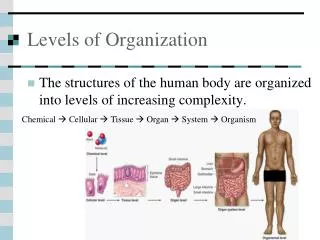
This overview delves into the levels of biological organization, beginning with abiotic components such as atoms and molecules, leading up to complex biotic structures like cells, tissues, and entire ecosystems. It highlights the distinction between abiotic elements devoid of life and biotic systems that encompass various life forms including animals, plants, fungi, and bacteria. Understanding these levels provides insight into the intricate web of life, from the simplest structures to the complex interplay within communities and ecosystems.

E N D
LEVELS OF ORGANIZATION From NON-LIVING to LIVING Beings
NON LIVING • A- BIO-TIC • A : LACK OF BIO: LIFE
ABIOTIC LEVELS • ATOMS
ABIOTIC LEVELS • MOLECULES (I)
ABIOTIC LEVELS • MACROMOLECULES (II)
ABIOTIC LEVELS • MACROMOLECULES (II)
ABIOTIC LEVELS • MACROMOLECULES (III)
ABIOTIC LEVELS • ORGANELLES
BIO-TIC LEVELS • BIO = LIFE CELLS
BIOTIC LEVELS • TISSUES • ANIMAL TISSUE:
BIOTIC LEVELS • PLANT TISSUE (I)
BIOTIC LEVELS • ORGANS
BIOTIC LEVELS • OTHER LIFE KINGDOMS? • ANIMALIA • PLANTAE • FUNGI • PROTISTA • BACTERIA (MONERA) NOT ALL HAVE TISSUES OR ORGANS
BIOTIC LEVELS ORGANISMS
BIOTIC LEVELS • COMMUNITIES…
BIOTIC • POPULATIONS
BIOTIC LEVELS • ECOSYSTEMS (I)
BIOTIC LEVELS • ECOSYSTEMS (II)
BIOTIC LEVELS • ECOSYSTEMS (III)
REVIEW • LEVELS OF ORGANIZATION • BIO = LIFE • A-BIO= LACK OF LIFE