Download
1 / 12
120 likes | 260 Vues
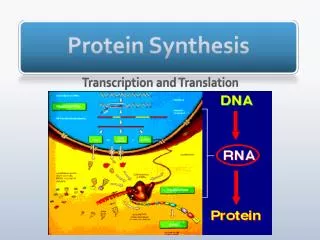
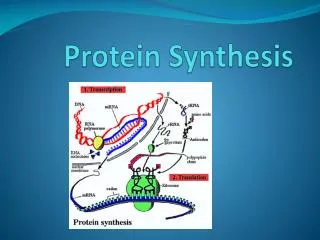
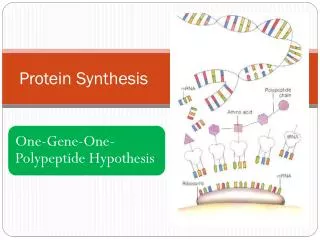
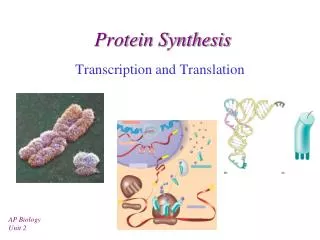
Protein synthesis is a fundamental biological process that involves the creation of proteins from amino acids, directed by genetic information. This process occurs in two main stages: transcription and translation. Transcription takes place in the nucleus, where DNA is copied to messenger RNA (mRNA). The mRNA then travels to the cytoplasm, where ribosomal RNA (rRNA) and transfer RNA (tRNA) collaborate to assemble amino acids into a polypeptide chain, forming proteins. Understanding this process is crucial for grasping how genes express traits and how cells function.

E N D
Protein Synthesis A brief overview • Purpose? • Key Players? • Where does it occur? • How does it work? • WHY?
Purpose? • Synthesize – • Protein Synthesis – • Protein is a chain of amino acids
Key Players? • DNA… (ex: ATGCCGTAATACGGG)
Four types of nucleotides:adenine (A)guanine (G)cytosine (C)thymine (T)
RNA Similarities to DNA Differences from DNA
Types of RNA Messenger RNA (mRNA) -”message carrier”
Types of RNA Ribosomal RNA (rRNA) (workbench) “reading” RNA
Types of RNA Transfer RNA (tRNA) -transfers a.a. - reusable
Where does it occur? How does it work? Nucleus 1.Transcription
Cytoplasm2.Translation ribosome mRNA
Write the central dogma of protein synthesis: Protein Synthesis Video Protein Synthesis Video2
Quick Write Write the steps of protein synthesis and explain the roles of DNA, tRNA, mRNA and rRNA have in the process