Enhancing Module Assembly: Solutions for Vacuum Patterns and Bonding Issues
This document outlines challenges and potential improvements in the module assembly process. Key issues include difficulties in vacuum pattern changes, the need for better sliding mechanisms on location pins, and uncertainties regarding sensor alignment with slider mechanisms. The impact of stiff metal on leakage and uniform thickness is examined, along with the search for optimal stenciling methods and adhesives. Recommended adhesive properties include higher viscosity, a work life exceeding 20 minutes, and cure times under eight hours to facilitate efficient plate reuse.


Enhancing Module Assembly: Solutions for Vacuum Patterns and Bonding Issues
E N D
Presentation Transcript
Module assembly plate • Need to change vacuum pattern • Need to find better method of sliding on location pins • Might not be relevant as vacuum can be linked to all issues seen so far • Hard to tell is sensor is against pins, especially with “straw” sliders • Landing pins might be moving/hard to set height
Sensor-to-hybrid glue • Need to pick best method of stencilling on hybrid • Does stiff metal cause leakage? How uniform is the thickness? • Need to find better glue if possible which won’t need pre-curing • Higher viscosity • Work life >20min, < 2 hours • Cure time at room temperature <8 hours, <4 hours lets you reuse plates in a day
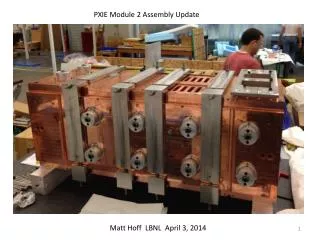
More Module Assembly • Assembly Frame • Is this useful at all? • Module Bonding Plate • Leakage of vacuum because test frame • Hard to bond ends due to lack of support • Final hybrids don’t overhang