Download
1 / 11
110 likes | 259 Vues
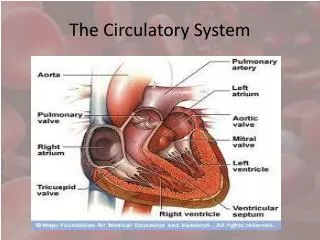
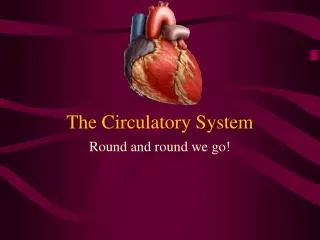
The circulatory system consists of three main parts: the heart, blood vessels, and blood. The heart includes atria (receiving chambers), ventricles (pumping chambers), valves (to control flow), and the septum (divides heart). Blood vessels are categorized into arteries (carry blood away from the heart), veins (bring blood back), and capillaries (distribute blood). Blood comprises 55% plasma, rich in water, proteins, and nutrients, while solids consist of red blood cells (oxygen transport), white blood cells (defense), and platelets (clotting).

E N D
The Circulatory System Parts and Function
The 3 main parts of TheCirculatory system • The Heart • The Blood Vessels • Blood
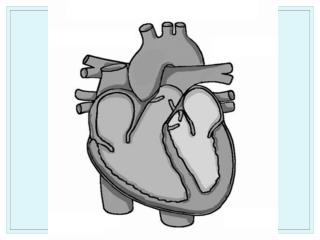
Parts of The Heart • The Atria -Receiving Chambers • The Ventricles -Pumping Chambers • The Valves -Controls Flow • The Septum -Divides the Heart
Types of Blood Vessels • Arteries -Carry blood away from the Heart -The Aorta is the largest artery • Veins -Carry blood away from the Heart -Veins contain valves -The Vena Cava is the largest vein • Capillaries -Known as the “Distribution Pipes”
The Composition of Blood • The Plasma (Fluid) makes up 55% of the blood volume. • The Solids (Cells) make up 45% of the blood volume.
Blood Plasma • 97% Water • Other 3% -Antibodies and Proteins - Nutrients and Wastes
Blood Solids • Red Blood Cells -Carry oxygen -Contain Hemoglobin • White Blood Cells -Attack bacteria & other invaders • Platelets -Control the blood clotting process
Credits • Graphics courtesy of Crystalcafe.com & The Franklin Institute online. • Presentation by Steve Kennette Thanks to: Spartanburg School District #5 Duncan, S. C.