Feudalism
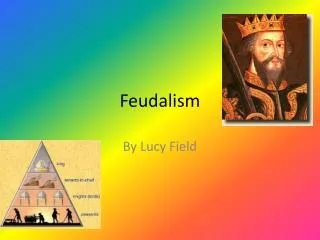
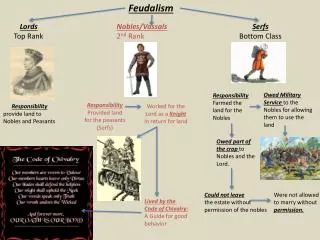
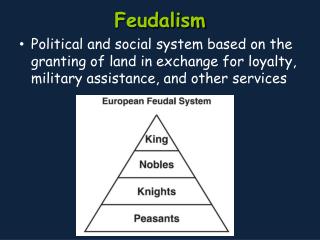
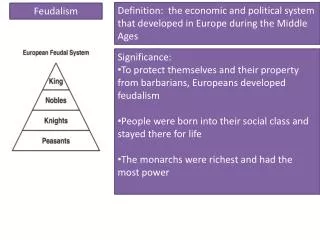
Feudalism was a social and economic system prevalent in the Middle Ages where land was exchanged for loyalty and services. Landownership was key to power and status during this time. Those with substantial landholdings often struggled to manage their lands alone and thus allowed lower-status individuals, known as vassals, to live and work on their land in exchange for loyalty and a portion of their produce. This hierarchical structure involved a king or queen at the top, followed by counts, dukes, lords, and knights, ultimately leading down to serfs, who worked the land.

Feudalism
E N D
Presentation Transcript
feudalism • a system in which land is exchanged for loyalty and services. • Feudal system
Being Important in the Middle Ages • owning land = being important • If you owned a lot of land, it could be hard to take care of it and use it all. • So, those who owned lots of land allowed (less important) other people to use it and live on it – but they had to swear homage (loyalty) to the king and whoever granted them their land.
Vassals • In doing this, they would have to promise a portion of the crops they grew to the person to whom they pledged loyalty. • Also, they had to promise to help out the person who gave them the land if needed.
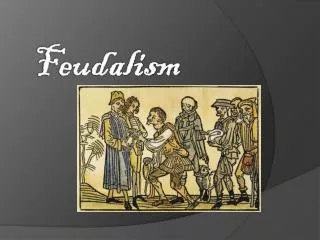
Swearing Loyalty • A person who received land from a ruler, and in turn promised aid, was called a vassal. • The plot of land exchanged for loyalty to a ruler was called a fief.
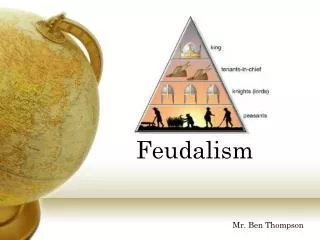
Feudal Pyramid King/Queen Count Duke Lord (Vassal to Count) Knight (Vassal to Count) Lord (Vassal to Duke) Knight (Vassal to Duke) Serf 1 Serf 4 Serf 7 Serf 10 Serf 5 Serf 2 Serf 8 Serf 11 Serf 6 Serf 9 Serf 12 Serf 3 Serf 13 Serf 14