Baseline Characteristics and Outcomes of the PROSPER Trial: Impact of Pravastatin on Vascular Diseases
70 likes | 191 Vues
The PROSPER trial, conducted by Shepherd et al. and published in Lancet in 2002, analyzed the baseline clinical characteristics of participants aged around 75 years, focusing on the effects of pravastatin on coronary heart disease and stroke. With 1259 subjects having a history of vascular disease, alongside high rates of hypertension and diabetes, the study provided comprehensive data on cholesterol levels, smoking habits, and other health metrics. This research plays a crucial role in understanding the benefits of lipid-lowering therapies for elderly populations.


Baseline Characteristics and Outcomes of the PROSPER Trial: Impact of Pravastatin on Vascular Diseases
E N D
Presentation Transcript
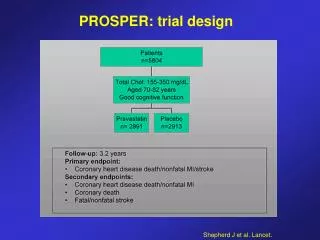
PROSPER: trial design Shepherd J et al. Lancet. 2002;360:1623-30
Placebo Pravastatin Age (yrs) 75.3 75.4 Female (%) 52 52 History of any vascular disease, n (%) 1259 (43.2) 1306 (45.2) Current smoker, n (%) 805 (27.6) 753 (26.0) History of hypertension, n (%) 1793 (61.6) 1799 (62.2) Mean SBP/DBP (mm Hg) 154.6/83.94 154.7/83.64 History of diabetes, n (%) 320 (11.0) 303 (10.5) PROSPER: Baseline Clinical Characteristics Shepherd J et al. Lancet. 2002;360:1623-30
Placebo Pravastatin Total cholesterol (mg/dL) 221 221 HDL-C (mg/dL) 50 50 LDL-C (mg/dL) 147 147 Triglycerides (mg/dL) 133 133 PROSPER: Baseline Lipid Profile Shepherd J et al. Lancet. 2002;360:1623-30
PROSPER: primary endpoint (coronary death, nonfatal MI, and stroke). Shepherd J et al. Lancet. 2002;360:1623-30
PROSPER: rates of CHD-related death and nonfatal MI Shepherd J et al. Lancet. 2002;360:1623-30
PROSPER: rate of CHD-related death Shepherd J et al. Lancet. 2002;360:1623-30
PROSPER: rates of fatal and nonfatal stroke Shepherd J et al. Lancet. 2002;360:1623-30