Mapping Technology and Topographic Maps
This chapter explores the fundamentals of mapping technology and topographic maps, focusing on key concepts such as pixels, contour lines, and contour intervals. Learn about the Global Positioning System (GPS), which offers accurate location services via satellite signals. We also delve into Geographic Information Systems (GIS), used to create interactive maps. Aerial photography and digitization processes are discussed, highlighting their role in modern cartography. Mastering these principles is essential for effective map reading and navigation.

Mapping Technology and Topographic Maps
E N D
Presentation Transcript
Mapping TechnologyandTopographic Maps Chapter 1, Lesson 3 and 4
One bit of a digitized image, often appearing as a small square or dot. pixel
A navigation system that uses satellite signals to locate a radio receiver on Earth’s surface. Global Positioning System (GPS)
The difference in elevation from one contour line to the next. contour interval
A system of computer hardware and software used to produce interactive maps. Geographic Information System
A photograph taken by cameras mounted in airplanes. aerial photograph
Converting information to numbers for use by a computer. digitizing
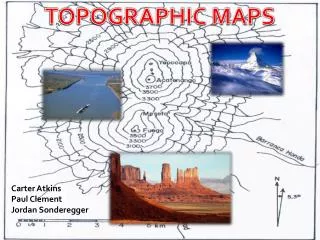
A line on a topographic map that connects points of equal elevation. contour line
On a topographic map, a heavier contour line that is labeled with elevation of that contour line. index contour
A picture of the land surface based on computer data collected from satellites. satellite image
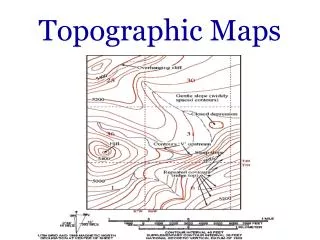
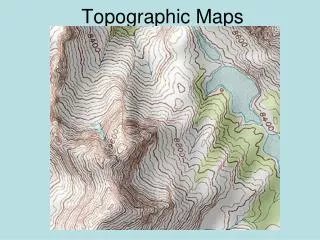
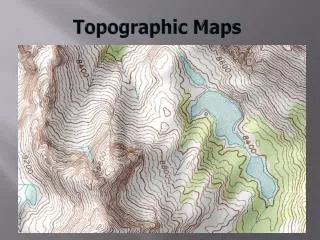
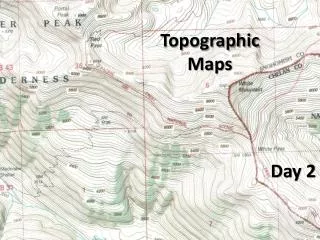
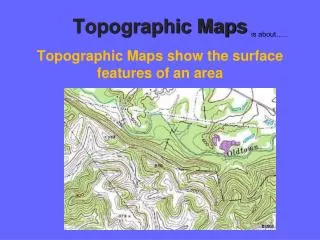
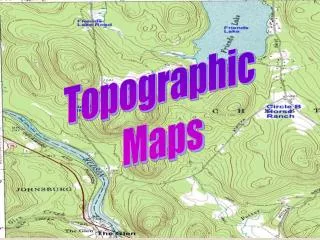
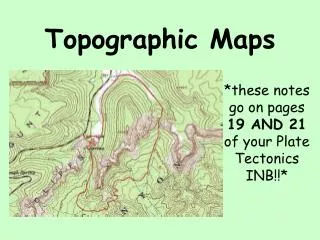
A map that shows the surface features of an area. topographic map
The process of gathering data for a map by using instruments and the principles of geometry to determine distance and elevations. surveying
GOOD LUCK!!! STUDY! STUDY! STUDY!