

SlideServe
Menu
Préférences
© SlideServe · v2026

Coagulation

cisco avatar
18 diapositives · 675 Views · Aug 09, 2014

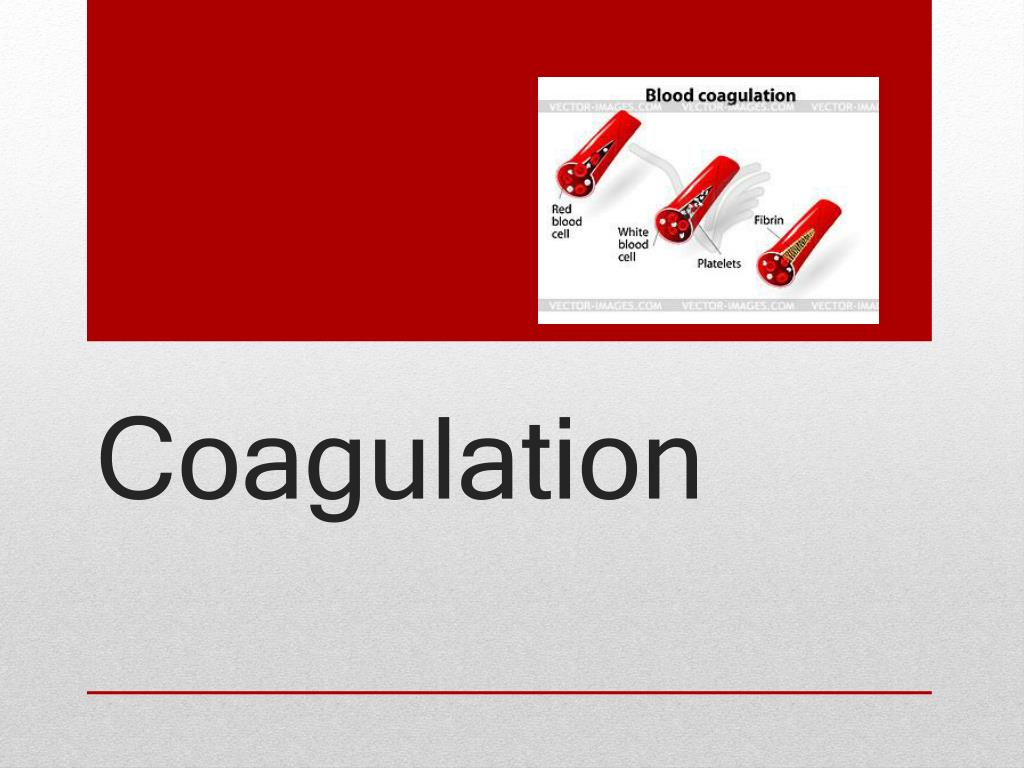
Coagulation. Cut or injury platelets and injured tissue release Thromboplastin  act on Prothrombin in plasma  + Calcium ions converts to Thrombin  the thrombin acts as an enzyme and changes Fibrinogen  Fibrin creating a mesh that traps red blood cells,
Coagulation - slide 1
01 / 18Coagulation
1 / 17

Télécharger la présentation

Coagulation
Une image / un lien ci-dessous est fourni (tel quel) pour télécharger la présentation

Politique de téléchargement : le contenu du site vous est fourni TEL QUEL pour votre information et votre usage personnel ; il ne peut être vendu, concédé sous licence ni partagé sur d’autres sites sans l’accord de son auteur.Le contenu vous est fourni TEL QUEL, pour votre information et votre usage personnel uniquement. Téléchargez la présentation en cliquant sur ce lien. Lors du téléchargement, si vous ne parvenez pas à télécharger une présentation, l’éditeur a peut-être supprimé le fichier de son serveur.Pendant le téléchargement, si vous ne parvenez pas à obtenir une présentation, le fichier a peut-être été supprimé par l’éditeur.

F I N

Plus de contenu associé

Transcription de la présentation
  1. Coagulation

  2. Cut or injuryplatelets and injured tissue release Thromboplastin  act on Prothrombin in plasma  + Calcium ions converts to Thrombin  the thrombin acts as an enzyme and changes Fibrinogen  Fibrin creating a mesh that traps red blood cells, platelets and plasma creating a blood clot. Coagulation

  3. Anticoagulants prevent blood clotting • Heparin:antiprothrombin • Prothrombin is dependent on Vitamin K Coagulation Cont.

  4. White Blood Cells Leukocytes

  5. Larger than erythrocytes • Five types Leuk/o/cytes – white cells Leukocytes 2.01 Remember the structures of the circulatory system

  6. Larger than erythrocytes • Granular or agranular • 5 types • Normal leukocyte count = 3,200 – 9,800 • Diapedesis- when WBC have the ability to squeeze through the intercellular spaces of capillary walls to fight infection in neighboring tissues. Leukocytes 2.01 Remember the structures of the circulatory system

  7. Agranulocytes • Lymphocytes • Monocytes • Granulocytes • Neutrophils • Eosinophils • Basophils Leukocytes 2.01 Remember the structures of the circulatory system

  8. Smallest of solid components of blood • Synthesized in red marrow • Not cells, composed of fragments of megakaryocytes • Necessary for the initiation of the blood clotting process Thrombocytes 2.01 Remember the structures of the circulatory system

  9. Types of White Cells…

  10. Life Span of Blood cells 2.01 Remember the structures of the circulatory system

  11. Phagocytosis – process when white cells surround engulf, and digest harmful bacteria.

  12. Inflammation

  13. Start  Pus produced a combination of dead tissue, dead and living bacteria, dead leukocytes and plasma Body’s reaction to chemical or physical trauma.  Histamine increases the blood flow to the injured area.  Pathogenic disease producing microorganisms can cause inflammation. Symptoms – redness, local heat, swelling and pain   Inflammation  Why? Bacterial toxins, increase blood flow, collection of plasma in tissues – edema.

  14. Inflammation

  15. Inflammation Cont.

  16. Hematology BM #2

  17. BM #3

  18. 1. Name and describe the five different types of what blood cells. 2. Draw a picture for each white blood cell with their job for your body. • For example if they eat the bacteria draw a big mouth as the WBC and a bacteria inside. 3. What is inflammation? Describe a time when you had an inflammation. 4. List the process of coagulation. Remember to copy the words from the bubble map in color and color the pictures. Hematology BM#2 Questions