Impact of Salubrinal on Cell Mortality and Gene Expression in Osteoblasts
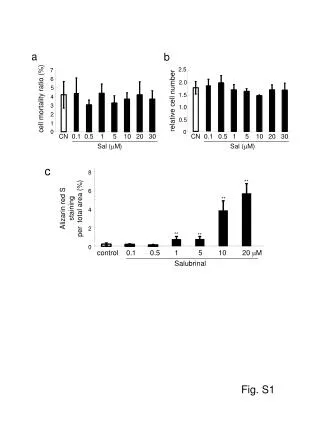
This study investigates the influence of Salubrinal at various concentrations on cell mortality ratios and the relative abundance of osteocalcin (OCN) mRNA in osteoblast-like cells. Findings reveal the effects of Salubrinal on apoptosis pathways, including p-eIF2α and ATF4 expression levels. The experiments utilize Alizarin red S staining and evaluate changes in relative cell numbers, highlighting the therapeutic potential of Salubrinal in osteoblast survival and differentiation. Detailed results are illustrated in multiple figures, emphasizing dose-dependent responses.

Impact of Salubrinal on Cell Mortality and Gene Expression in Osteoblasts
E N D
Presentation Transcript
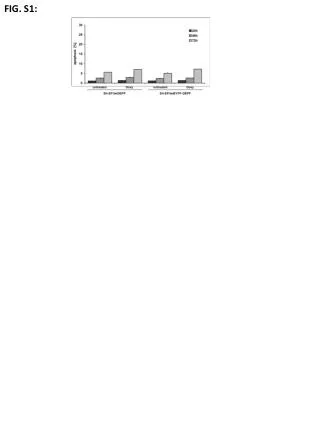
a b 2.5 7 6 2.0 5 1.5 4 cell mortality ratio (%) relative cell number 3 1.0 2 0.5 1 0 0 CN 0.1 0.5 1 5 10 20 30 Sal (mM) CN 0.1 0.5 1 5 10 20 30 Sal (mM) c 8 ** 6 Alizarin red S staining per total area (%) ** 4 2 ** ** 0 control 0.1 0.5 1 5 10 20 mM Salubrinal Fig. S1
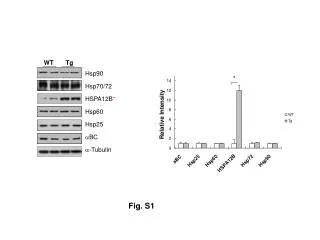
a control Sal 1 2 4 8 24 1 2 4 8 24 h p-eIF2a Sal 8 h (clone 14) eIF2a ATF4 b-actin b Relative mRNA abundance OCN 2.0 ATF4 2.0 ** ** ** 1.5 * ** 1.5 ** 1.0 1.0 0.5 0.5 0 CN Sal5 Sal10 Sal20 0 CN Sal5 Sal10 Sal20 Fig. S2
4 * a b ** 3 cell mortality ratio (%) 2 2.5 1 2.0 0 1.5 CN 5 10 20 relative cell number Gu (mM) 1.0 0.5 6.0 OCN ** 0 c CN 5 10 20 5.0 Gu control Gu (mM) 4.0 Relative mRNA abundance 2 4 8 24 2 4 8 24 h 3.0 p-eIF2a 2.0 * 1.0 eIF2a 0 CN 5 10 20 Gu (mM) ATF4 b-actin d Fig. S3
a 7 b 6 5 cell mortality ratio (%) 4 3 2 1 0 CN Gu Sal RANKL c CN Sal Gu RANKL NFATc1 2.0 b-actin 1.5 relative cell number d 1.0 0.5 0 Relative mRNA abundance Gu Sal CN RANKL NFATc1 TRAP 10 300 200 5 100 0 0 CN Sal RANKL Gu CN Sal RANKL Gu Fig. S4


![[Fig. S1]](https://cdn3.slideserve.com/6448662/slide1-dt.jpg)