SlideServe
Menu
Préférences
© SlideServe · v2026

Understanding DNA Technology: Mutations and Their Impact on Biology

dyami avatar
15 diapositives · 275 Views · Jul 18, 2014

This overview explores DNA technology, focusing on various types of mutations: point mutations, frameshift mutations, and chromosomal mutations. It explains the processes that lead to these mutations, such as error during DNA replication, and environmental factors like radiation and pollutants. Insights into the applications of DNA technology, including transgenic organisms and genetically modified foods, highlight their potential benefits and risks. Lastly, the role of stem cells in repairing genetic defects like cystic fibrosis is discussed, emphasizing the significance of DNA in modern biology.
Understanding DNA Technology: Mutations and Their Impact on Biology - slide 1
01 / 15Understanding DNA Technology: Mutations and Their Impact on Biology
1 / 17

Télécharger la présentation

Understanding DNA Technology: Mutations and Their Impact on Biology
Une image / un lien ci-dessous est fourni (tel quel) pour télécharger la présentation

Politique de téléchargement : le contenu du site vous est fourni TEL QUEL pour votre information et votre usage personnel ; il ne peut être vendu, concédé sous licence ni partagé sur d’autres sites sans l’accord de son auteur.Le contenu vous est fourni TEL QUEL, pour votre information et votre usage personnel uniquement. Téléchargez la présentation en cliquant sur ce lien. Lors du téléchargement, si vous ne parvenez pas à télécharger une présentation, l’éditeur a peut-être supprimé le fichier de son serveur.Pendant le téléchargement, si vous ne parvenez pas à obtenir une présentation, le fichier a peut-être été supprimé par l’éditeur.

F I N

Plus de contenu associé

Transcription de la présentation
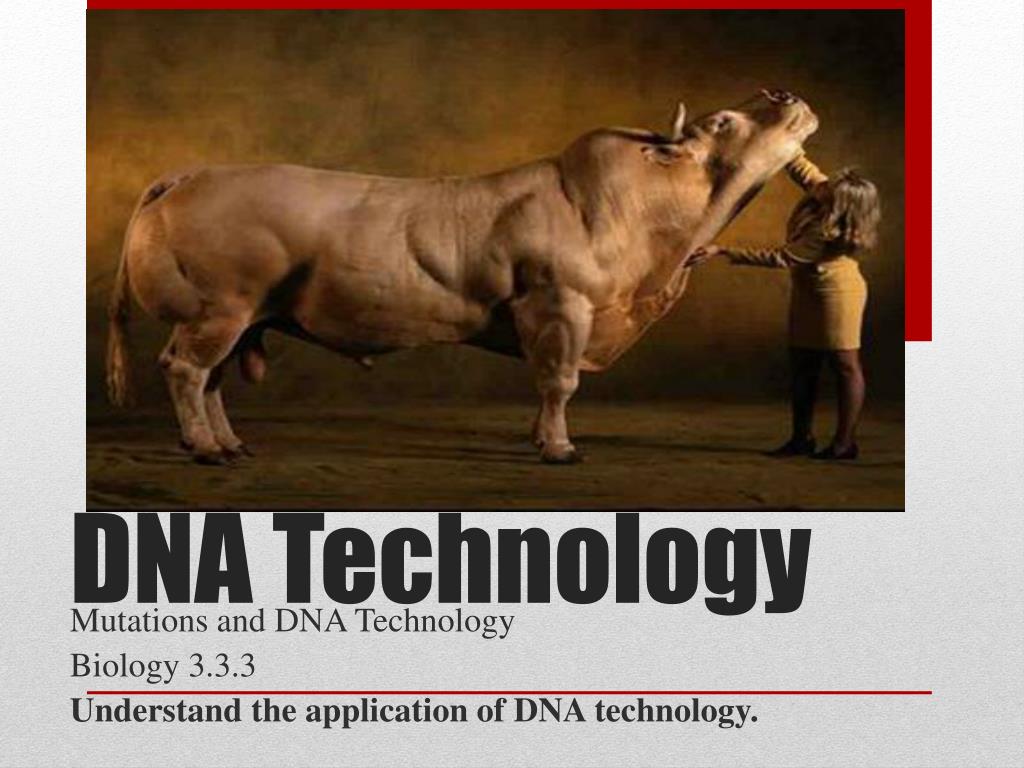
  1. DNA Technology Mutations and DNA Technology Biology 3.3.3 Understand the application of DNA technology.

  2. There is always a chance for a mistake during DNA replication. • There are 3 possible mutations: • Point • Frameshift • Chromosomal Mutation

  3. One nitrogen base is switched or incorrect. • Changes 1 amino acid. • THE DOG BIT THE CAT. • THE DOG BIT THE CAR. Ex. Sickle cell anemia Point Mutation

  4. A single nitrogen base is added or deleted. • This disrupts all following codons! • Example: • THE DOG BIT THE CAT. • THE DOG BTT HEC AT. Frameshift Mutation

  5. When an entire chromosome is missing or there is an extra chromosome. • Occurs during Meiosis. • Called Non-Disjunction. • In most cases, causes death or sterility. Chromosomal Mutation

  6. Under most circumstances, DNA molecules are very stable. They survive in the nucleus of a cell without undergoing change, and they reproduce themselves during cell division without being damaged. But accidents do occur. • For example, an X ray passing through a DNA molecule might break the chemical bond that holds two nucleotides together. The DNA molecule is destroyed and is no longer able to carry out its function. Causes of DNA Mutations

  7. caffeine (found in coffee and colas), • LSD (lysergic acid diethylamide; a hallucinogenic drug), • benzo(a)pyrene (found in cigarette and coal smoke), • nitrous oxide (laughing gas), • ozone (a major pollutant when in the lower atmosphere). • X-rays Mutagen: something that causes a mutation.

  8. is a method for separation and analysis of macromolecules (DNA, RNA and proteins) and their fragments, based on their size and charge. DNA Fingerprinting

  9. an organism which has been modified with genetic material from another speciesby inserting DNA into an embryo with the assistance of a virus, a plasmid, or a gene gun. Transgenic Organism

  10. Goal is to reduce the threats on an organism. • DNA in one organism is expressed in another organism Reason Transgenic Organism

  11. Genetically Modified Organism Genetically Modified Food Food that has been altered to reduce pest, pesticides, carbon emission, or “dry crop” • Organism genetic material has been altered to benefit the organism GMO

  12. Top GMF

  13. Gives the complete blue print of EACH GENETIC CODE Human Genome Project

  14. STEM CELLS occur during FERTILIZATION REPAIR ERROR in the Human GENOME • derived from the inner cell mass of a blastocyst, an early-stage embryo.[1] Human embryos reach the blastocyst stage 4–5 days post fertilization, at which time they consist of 50–150 cells Stem Cell

  15. Cystic Fibrosis Fragile X syndrome STEM CELLS –GENETIC DISEASE