Understanding Maps: Types, Uses, and Components in Navigation
Maps are vital tools for locating places and navigating terrains. They come in various types, including political, physical, and climate maps, each designed for specific uses. A political map outlines country boundaries and capitals, while physical maps demonstrate geographical features like mountains and rivers. Climate maps indicate weather patterns using color codes. Key components of maps include legends, compass roses, and scales, which help users interpret information effectively. This presentation aims to provide insights into the diverse uses of maps in analysis, communication, and exploration.

Understanding Maps: Types, Uses, and Components in Navigation
E N D
Presentation Transcript
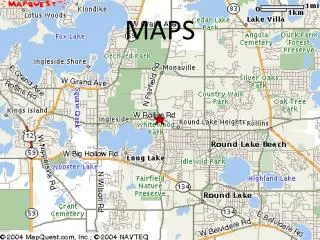
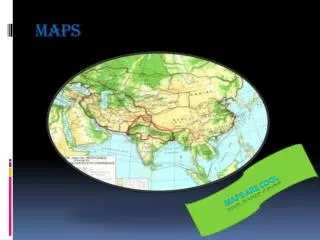
MAPS Maps Are Cool
Uses of a Map • A map helps locate places you are going to, or coming from . • Many maps are designed and produced to serve very specific uses while other maps contain so much information that they are used by a variety of users for a great variety of tasks. For this discussion we examine Map Uses from the perspective of the generic task, such as analysis, communication, exploration, etc.
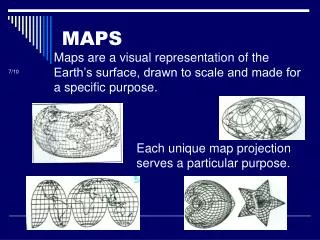
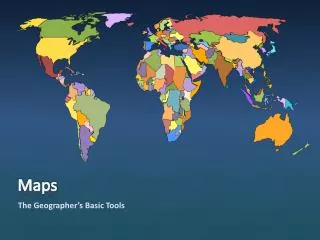
WHAT IS A MAP? • A Map is representation of the surface of the earth, or some portions of it is showing relative position of the parts represented; usually on a flat surface.
Different types of maps The different types of maps are: 1. POLITICAL MAP 2. PHYISCAL MAP 3. CLIMATE MAP
Political Map • A political map is a map that shows boundaries of countries usually their capitals, other geographic features like mountains ect. are not included. However rivers are often but not always included
Climate Map • A climate map is a map that show weather prevailing patterns and uses colors to out- lay the weather in a specific place.
Physical Map A physical map is map that shows details across the United States like mountains, and rivers other geographic features . A physical map of the human body and how the D.N.A is measured throughout the body and it is also known as a genetic map.
Symbols on a map • 1. A MAP LEGEND/KEY • 2. COMPASS ROSE OR WIND ROSE • 3.SCALE
Map Legend/Key • A map legend/key tells what a map represents and tells you the meaning of the symbols used on a map. It is like a dictionary to the meaning of the symbols.
Compass Rose • A compass rose, sometimes called a windrose, is a figure on acompass, map, nautical chart or monument used to display the orientation of the cardinal directions North, East, South and West - and their intermediate points. It is also the term for the graduated markings found on the traditional magnetic compass. Today, the idea of a compass rose is found on, or featured in, almost all navigation systems, including nautical charts, non-directional beacons (NDB), VHF unidirectional range (VOR) systems, global-positioning systems (GPS), and similar equipment and devices.
A Map Scale • The scale of amap is defined as the ratio of a distance on the map to the corresponding distance on the ground.
What is a map title A map title tells what the map is about and is usually found on the top to bottom
Thank you for watching our Presentation Special Thanks go to Mrs.Ferreira & Mrs. Hamilton for giving us some 0f the information!!! Christian Smith Mark Darling Brandy Bodie Geovannie Embloton Terrance Penn & last but not least Jasmine Green We are thankful to do this presentation for you our special audience ! We hopes it helps you!