Understanding Essential Nutrients: A Guide to Healthy Eating
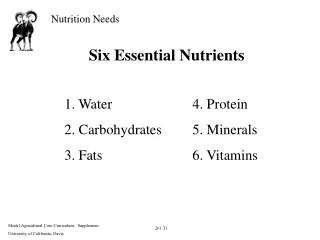
This comprehensive guide explores the essential nutrients your body needs for optimal health. Discover the roles of carbohydrates, fats, proteins, vitamins, minerals, fiber, and water in your diet. Learn how different types of carbohydrates impact blood sugar levels, the importance of both saturated and unsaturated fats, and the need for adequate protein intake. Gain insights on how vitamins and minerals contribute to growth and development, and understand the significance of hydration. Make informed dietary choices for better health.

Understanding Essential Nutrients: A Guide to Healthy Eating
E N D
Presentation Transcript
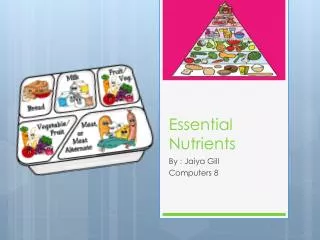
Essential Nutrients By : Jaiya Gill Computers 8
Carbohydrates • Gives energy to the body • Some cause blood sugar to rise Diabetes • Complex starches are healthier than simple sugars • 2 types • Simple (sugars) - short lasting • Fruit, dairy, etc… • Complex (starches) - long lasting • Grains
Fats • Develops brain and nervous system • Trans fat should be avoided • Unsaturated fat is good for heart health • 3 Types • Saturated • Meat, dairy (except skim products), coconut and palm oils • Unstaurated • Plant foods, fish, olive oil, peanut oil, and canola oil • Trans • Margarine, snack foods, baked goods, and fried foods
Protein • Replaces, maintains, and builds tissues • Adults 60 grams/day • Kids 1 gram/ 2 pounds their weight • 2 Types • Complete - all nine amino acids • Meat and dairy • Incomplete - missing one or more amino acids • Vegetarian proteins
Fiber (Fibre) • Lowers blood cholesterol • Slows absorption of glucose into the bloodstream • Helps constipation • 2 Types • Soluble - dissolves in water • Fruits, vegetables, grains • Insoluble – doesn’t dissolve in water • Fruits, vegetables, grains
Vitamins • Helps body grow and develop • Extra water soluble is urinated out • Fat soluble can be dangerous • 2 Types • Fat soluble - A, D, E, and K • Liver, fruits, vegetables • Water soluble - B and C • Fruits, vegetables
Minerals (Dietary) • Helps body grow and develop • Body needs a trace of each mineral • Some are used to make hormones • 2 Types • Macro - calcium, phosphorus, magnesium, sodium, potassium, chloride, sulfur • Dairy, vegetables, fruits, • Trace - iron, manganese, copper, iodine, zinc, cobalt, fluoride, selenium • Meat, fruit, vegetables, grains
Water • Body needs it to do most jobs • When body doesn’t have enough water Dehydrated • Without water your body would shut down • Fluids and most foods contain water
Bibliography • http://kidshealth.org/kid/stay_healthy/food/carb.html • http://www.cyh.com/HealthTopics/HealthTopicDetailsKids.aspx?p=335&np=284&id=1431#4 • http://www.healthykids.nsw.gov.au/recipes/facts-about-fats.aspx • http://kidshealth.org/kid/nutrition/food/protein.html# • http://kidshealth.org/teen/food_fitness/nutrition/fiber.html • http://kidshealth.org/kid/stay_healthy/food/vitamin.html • http://kidshealth.org/kid/stay_healthy/food/minerals.html • http://kidshealth.org/kid/stay_healthy/food/water.html