Understanding Predator-Prey Dynamics: Logistic vs. Exponential Growth
This educational resource explores the essential concepts of predator-prey relationships, specifically focusing on the dynamics between populations of predators and their prey. It includes definitions, trends observed in populations (like moose and wolves), and the factors influencing these relationships. The document highlights the cyclical nature of predator and prey populations, including the impact of human activities such as hunting, fishing, and deforestation on these dynamics. Graphical representations aid in differentiating between logistic and exponential growth patterns.

Understanding Predator-Prey Dynamics: Logistic vs. Exponential Growth
E N D
Presentation Transcript
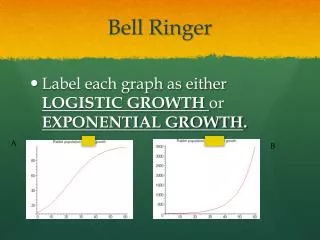
Bell Ringer • Label each graph as either LOGISTIC GROWTH or EXPONENTIAL GROWTH. A B
Predator vs. Prey Chapter 5.2 Continued
Definitions • PREDATOR- any organism that exists by preying upon other organisms. • PREY- an organism hunted or seized for food, especially by a carnivorous animal.
Predator-Prey Relationships • In predator-prey relationships the population of predators and prey might cycle up and down at times.
Trends • As the moose population increases, the wolf population starts to increase. When the moose population decreases, after awhile the wolf population decreases. Why does the moose population decrease after the wolf population increases? Why does the wolf population decrease when the moose population increases?
Predator vs. Prey • Which line is the predator and which is the prey?
Herbivores • How can plants change the population of a species of herbivores? Is it similar to the population relationship of moose and wolves?
Humans as Predators • Humans can change a population of organisms by doing the following: • Hunting • Fishing • Polluting • Deforestation