Protein Synthesis
110 likes | 221 Vues
This resource explains the central dogma of molecular biology, which illustrates how DNA is transcribed into RNA and then translated into proteins. The process begins in the nucleus with transcription, where RNA polymerase synthesizes messenger RNA (mRNA) from a DNA template. The mRNA then exits the nucleus and is translated on ribosomes, where transfer RNA (tRNA) brings amino acids according to the codons on the mRNA strand. The video content enhances understanding of each step, including key concepts such as the "reading frame" and the role of start and stop codons.


Protein Synthesis
E N D
Presentation Transcript
DNA structure (see video)
Dnavs.rna (see video)
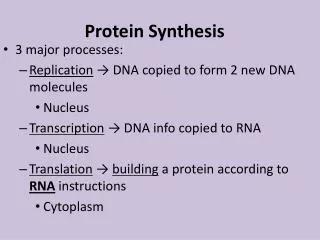
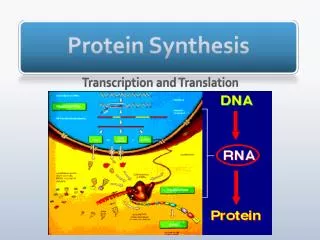
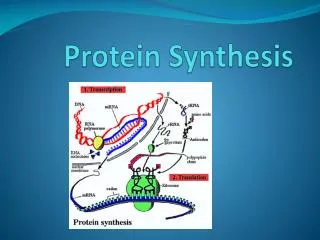
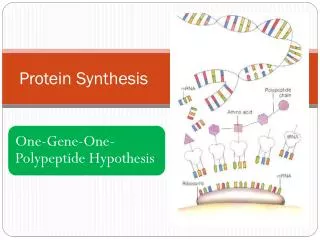
Central dogma • DNA is used to make RNA, and RNA is used to make proteins. DNA RNA protein transcription translation
TRanscription • Occurs in nucleus • RNA polymerase copies a gene from DNA • DNA used as a template • mRNA created, then leaves the nucleus
TRanscription (see video)
translation (see video)
translation • Occurs on a ribosome • 1. Ribosome uses rRNA to find start codon (sets the reading frame) • 2. First tRNAwith complimentary anti-codon attaches • 3. Next tRNA with complimentary anti-codon attaches • 4. Ribosome joins together the amino acids the tRNA molecules are carrying • 5. The ribosome continues joining amino acids until a special “stop” codon is reached
Important ideas Non-Template DNA Template DNA GTCGATGTCTTCAAGGCCCTTGTCGTAGGGT CAGCTACAGAAGTTCCGGGAACAGCATCCCA GUCGAUGUCUUCAAGGCCCUUGUCGUAGGGU “reading frame” set once start codon (AUG) is located AGU AGA UAC AGC UCC AAC GGG STOP mRNA met ser asn gly ser arg ser Finished sequence of amino acids = polypeptide (protein) tRNA w/anti-codon carrying amino acid (amino acid names are abbreviated)
Codon chart • Examples: • Codon #1 = • U A U • Codon #2 = • A G U • Codon #3 = • U A G