
Guidelines for Selecting Appropriate Statistical Methods for Data Analysis

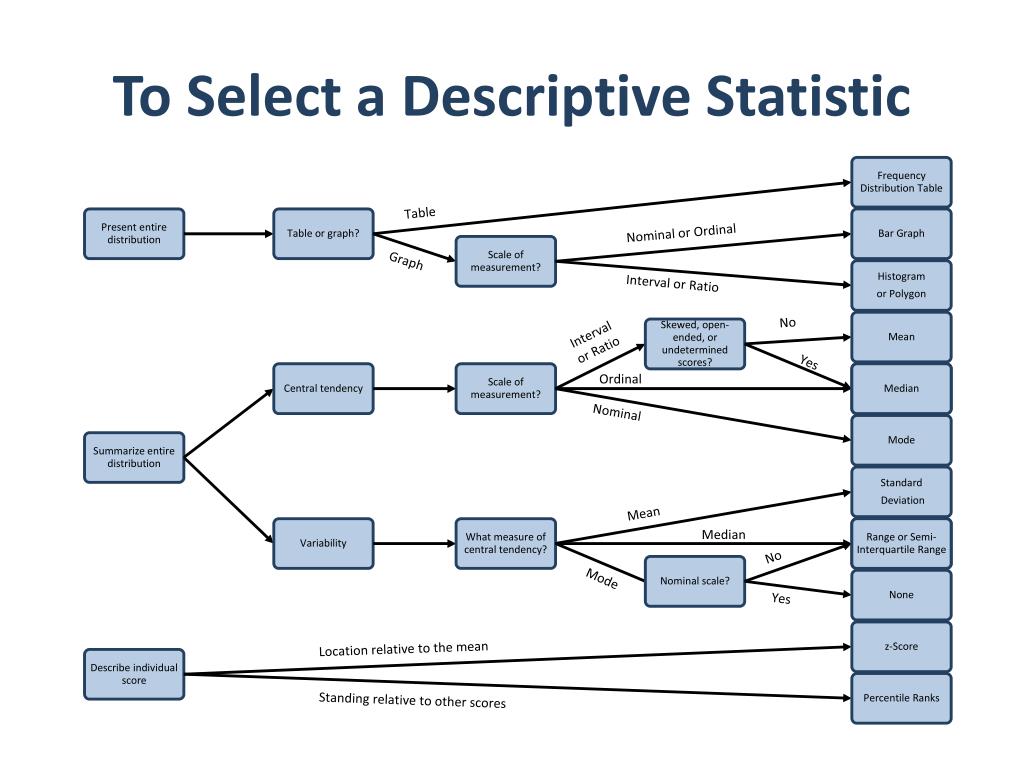
This document provides a comprehensive guide for selecting the appropriate statistical methods based on the type of data (nominal, ordinal, interval, or ratio) and the specific analysis objectives. It covers how to choose descriptive statistics such as mean, median, and mode, as well as parametric and nonparametric statistics for evaluating group differences. Additionally, it examines the relationship between two variables using linear and monotonic methods, providing criteria for matched and independent samples. This tool is essential for researchers and analysts to ensure valid interpretations of their findings.
Télécharger la présentation 
Politique de téléchargement : le contenu du site vous est fourni TEL QUEL pour votre information et votre usage personnel ; il ne peut être vendu, concédé sous licence ni partagé sur d’autres sites sans l’accord de son auteur.Le contenu vous est fourni TEL QUEL, pour votre information et votre usage personnel uniquement. Téléchargez la présentation en cliquant sur ce lien. Lors du téléchargement, si vous ne parvenez pas à télécharger une présentation, l’éditeur a peut-être supprimé le fichier de son serveur.Pendant le téléchargement, si vous ne parvenez pas à obtenir une présentation, le fichier a peut-être été supprimé par l’éditeur.
F I N