Download
1 / 5
50 likes | 162 Vues
Exchange rates indicate how much of one currency can be bought with another. A strong pound means UK citizens can buy more foreign currency, making imports cheaper but exports more expensive. For instance, if £1 buys $1.50 in 2012 and $2.00 in 2013, imported goods cost less, while UK products become pricier for foreign buyers. Conversely, a weak pound limits purchasing power for foreign currency and raises the cost of imports but reduces the price of exports for overseas customers. Exchange rate fluctuations affect holidays, cash withdrawals abroad, and prices of goods.

E N D
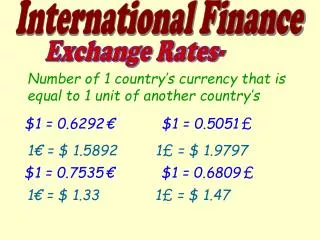
Exchange Rate – how much of one currency you can buy using another currency. • IE: £1 = $1.50
What does it mean if the £ is STRONG? • We can buy MORE of the foreign currency than before • IE: If in 2012 £1 = $1.50 and in 2013 £1 = $2.00 • This means we get MORE dollars for £1 than we did before. • A strong pound means IMPORTS from other countries are CHEAPER for UK citizens. • IE: If something costs $30, it will cost us £20 in 2012 and £15 in 2013 • A strong pound means UK EXPORTS to other countries become more EXPENSIVE for foreign customers. • IE: If something costs £10, it will cost Americans $15 to buy it in 2012 and $20 to buy it in 2013
What does it mean if the £ is WEAK? • We can’t buy as much of the foreign currency as before • IE: If in 2012 £1 = $1.50 and in 2013 £1 = $1.00 • This means we get LESS dollars for £1 than we did before. • A weak pound means IMPORTS from other countries are more EXPENSIVE for UK citizens. • IE: If something costs $30, it will cost us £20 in 2012 and £30 in 2013 • A weak pound means UK EXPORTS to other countries become CHEAPER for foreign customers. • IE: If something costs £10, it will cost Americans $15 to buy it in 2012 and $10 to buy it in 2013
How do changes in Exchange Rates affect us? • Foreign holidays • Withdrawing cash from cash machines abroad • Food in supermarkets • Imported consumer goods