
SlideServe
Menu
Préférences
© SlideServe · v2026

PRC State Ideologies

isi avatar
23 diapositives · 396 Views · Mar 07, 2013

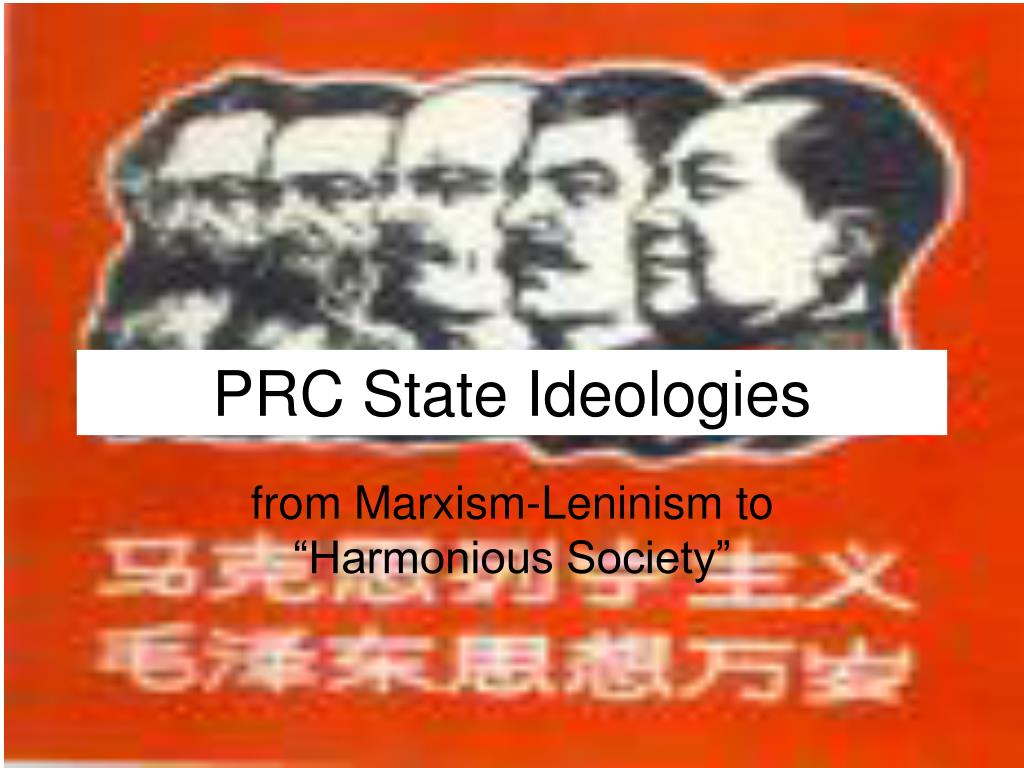
PRC State Ideologies. from Marxism-Leninism to “Harmonious Society”. Political Ideology. A systematic set of ideas explanation of political phenomena criteria and standards of evaluation social and cultural orientation to define and affirm individual and collective identity
PRC State Ideologies - slide 1
01 / 23PRC State Ideologies
1 / 17

Télécharger la présentation

PRC State Ideologies
Une image / un lien ci-dessous est fourni (tel quel) pour télécharger la présentation

Politique de téléchargement : le contenu du site vous est fourni TEL QUEL pour votre information et votre usage personnel ; il ne peut être vendu, concédé sous licence ni partagé sur d’autres sites sans l’accord de son auteur.Le contenu vous est fourni TEL QUEL, pour votre information et votre usage personnel uniquement. Téléchargez la présentation en cliquant sur ce lien. Lors du téléchargement, si vous ne parvenez pas à télécharger une présentation, l’éditeur a peut-être supprimé le fichier de son serveur.Pendant le téléchargement, si vous ne parvenez pas à obtenir une présentation, le fichier a peut-être été supprimé par l’éditeur.

F I N

Plus de contenu associé

Transcription de la présentation
  1. PRC State Ideologies from Marxism-Leninism to “Harmonious Society”

  2. Political Ideology • A systematic set of ideas • explanation of political phenomena • criteria and standards of evaluation • social and cultural orientation to define and affirm individual and collective identity • program of political action • Lenin: “What is to be done?”

  3. Pillars of Communist Regimes • Marxist ideology • Karl Marx (1818 - 1883) • Communist Party • Lenin (1870 - 1924) • command economy • Stalin (1879 - 1953)

  4. Marxism • Dialectics • contradictions and class struggle • Materialism • productive forces, economic structure, and superstructure • in time proletariat will be emancipated from capitalist exploitation through an international revolution

  5. Leninism • Marxist revolution can happen • in one country • before industrialization • before capitalist democracy • Bolshevik party • highly disciplined • hierarchical organization • of professional revolutionaries

  6. Mao Zedong Thought • practical politics and inconsistency • continuous revolution in a backward agrarian society of half a billion peasants • the “red” versus “expertise” debate • revolutionary change • smooth administration • technical expertise • ultimate goal of making China strong

  7. Mao Zedong Thought • attacked traditional Chinese culture • especially the network of relationships • replaced with class identity, nationalism, and new loyalty • incorporated traditional elements • ideological indoctrination • Mao’s monopoly on determining what would constitute correct ideology for China

  8. Voluntarism • properly motivated people could overcome virtually any material odds to accomplish their goals • contradicts Marxist materialism • e.g. the “Great Leap Forward” • 1958 - 1960

  9. Mass Line • A leadership doctrine developed in 1940s • vanguard role of the party • dictatorial leadership • strong participatory role for the populace • before decision making • during implementation of policy initiatives • “from the masses to the masses” • intended to avoid losing touch with masses

  10. Mass Campaigns • concentrated attacks on specific issues • through mass mobilization of the populace • social or political transformation • economic development • e.g. Suppression of Counterrevolutionaries (1951) • e.g. Great Leap Forward (1958 – 1960) • e.g. Cultural Revolution (1966 – 1976)

  11. Struggle • directly contradict Confucian ideal of “harmony” • bad class labels: • landlords • capitalists • rich farmers • violence

  12. Egalitarianism • frugal living • Confucius: “those who head a state do not worry about scarcity but about inequality”

  13. Anti-Intellectualism • In Mao’s view, intellectuals • embodied the traditional culture • lost touch with the masses • used technical expertise to counter revolutionary enthusiasm • reinforced social inequality • repression of intellectuals cost China a generation of highly trained specialists

  14. United Front • “unite with all who can be united” • united with Chiang Kai-shek to fight Japanese in 1930s • united with “democratic parties” to fight Chiang Kai-shek in late 1940s

  15. Class Struggle • Mao’s unorthodox interpretations of Marxist class concepts • class labels were assigned in 1950s • carried by every resident until after Mao died • class status could be determined by political attitude • e.g. “capitalist-roaders” during the C.R. • class status could be hereditary

  16. Self-Reliance • Mao: “keep the initiative in one’s own hand” • whether a community could sustain itself even in adverse circumstances • the sudden withdrawal of Soviet aid in 1958 • Maoist China strived to minimize its dependence on any single foreign country

  17. Political Hierarchy

  18. Current PRC Constitution • “Under the leadership of the Communist Party of China • “and the guidance of Marxism-Leninism, Mao Zedong Thought, Deng Xiaoping Theory and the important thought of ‘Three Represents’ • “the Chinese people …”

  19. “Deng Xiaoping Theory” • “emancipate minds • “and seek truth from facts” • “It doesn’t matter whether the cat is black or white as long as it catches mice” • “cross the river by groping for stones”

  20. Jiang Zemin’s “3 Represents” • “the Communist Party represents the development requirements of China's advanced social productive forces”

  21. Hu Jintao: Harmonious Society • China Daily: “In a harmonious society, the political environment is stable, the economy is prosperous, people live in peace and work in comfort and social welfare improves.”