Atmosphere
80 likes | 187 Vues
Explore the layers of Earth's atmosphere and their significance. The atmosphere consists of four main layers: the troposphere (0-10 km), where weather occurs; the stratosphere (10-25 km), home to the protective ozone layer; the mesosphere (25-100 km), where most meteors burn up; and the thermosphere (100-400 km), known for the northern lights. The atmosphere is composed mainly of nitrogen, oxygen, argon, carbon dioxide, and noble gases. This PowerPoint presentation is provided by World of Teaching, a valuable resource for educators.


Atmosphere
E N D
Presentation Transcript
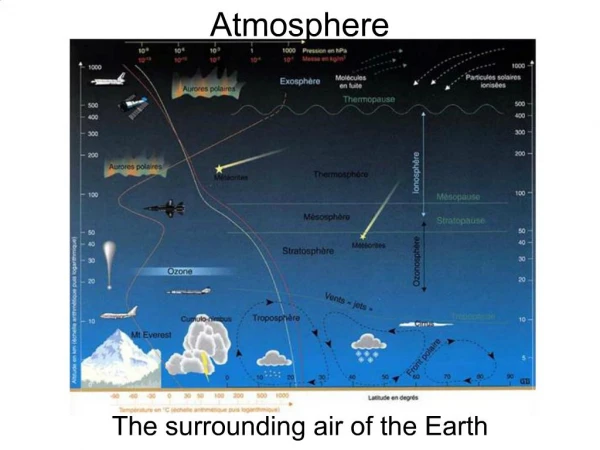
Atmosphere The surrounding air of the Earth
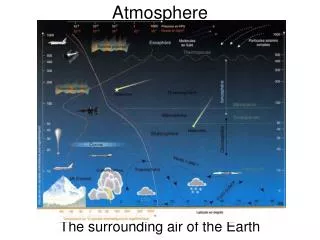
Layers of the atmosphere • There are 4 layers in the atmosphere • They are the troposphere, mesosphere, thermosphere, and stratosphere
Troposphere • This is the layer that is closest to the surface of the earth • It’s elevation ranges from 0 to 10 km
Stratosphere • This layer sits on top of the troposphere • It’s elevation ranges from 10 km to around 25 km • This layer contains the ozone layer, which protects us from harmful sunlight
Mesosphere • This layer is above the stratosphere • It’s elevation ranges from 25 to 100 km
Thermosphere • This is the highest layer of the atmosphere • It’s height ranges from 100 to 400 km • This is where most small meteorites burn up and is also the location in the atmosphere that the northern lights occur (aurora borealis)
Composition of Air • There are many different types of gasses in the atmosphere • They include nitrogen, oxygen, argon, carbon dioxide and other noble gasses • The gas that is most abundant is nitrogen
This powerpoint was kindly donated to www.worldofteaching.com http://www.worldofteaching.com is home to over a thousand powerpoints submitted by teachers. This is a completely free site and requires no registration. Please visit and I hope it will help in your teaching.