The Circulatory System
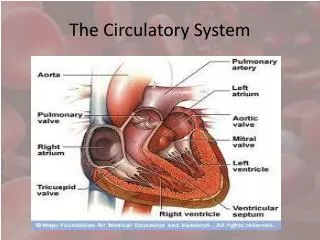
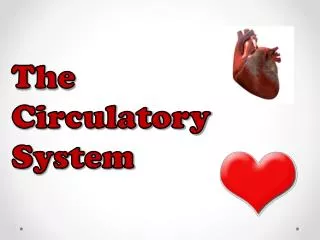
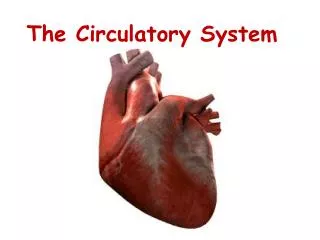
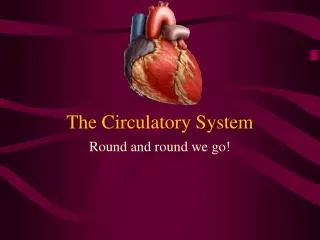
The human heart is a remarkable organ that beats over 100,000 times a day, consisting of four essential chambers: two atria and two ventricles. It is surrounded by the protective pericardium and made up of three main tissue layers: the outer epicardium, the muscular myocardium, and the inner endocardium. The heart contains four valves that regulate blood flow and a septum that divides it into right and left sides. Blood flows through the heart in a specific pathway, circulating between the body and lungs, ensuring effective oxygenation and nutrient delivery.

The Circulatory System
E N D
Presentation Transcript
The Circulatory System The Heart
The Heart • Beats over 100,000 times per day • Apex • tip of the heart that rests on the diaphragm
Tissues of the Heart • Pericardium • protective sac around the heart • secretes pericardial fluid • Epicardium • outermost layer of the heart
Tissues of the Heart • Myocardium • the actual heart muscle • thickest portion of heart wall • Endocardium • the layer of epithelial tissue lining the heart
Chambers of the Heart • The heart has 4 chambers. • two atria • two ventricles • Septum • divides the heart into right and left sides
The heart has 4 valves. • Two atrioventricular • tricuspid and bicuspid • Two semilunar • pulmonary and aortic
Arteries and Veins • Vena cava • superior • inferior • Aorta
The Pathway of Blood blood right atrium right ventricle lungs left atrium left ventricle aorta body
semilunar valve pulmonary arteries superior vena cava right atrium lungs tricuspid valve inferior vena cava right ventricle
pulmonary arteries pulmonary veins left atrium lungs bicuspid valve left ventricle
semilunar valve body aorta left ventricle