Understanding Spirometry: A Comprehensive Non-Invasive Assessment of Lung Function
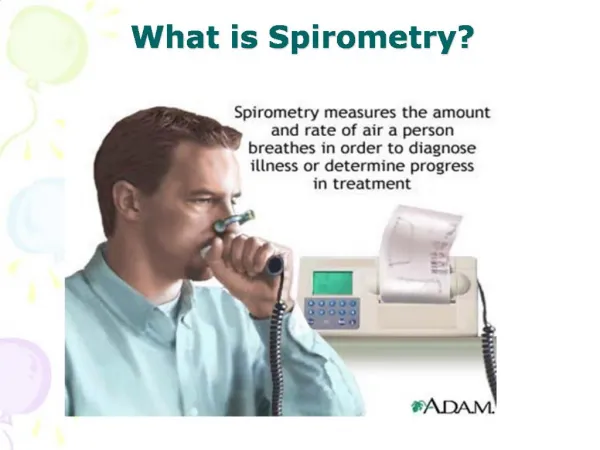
Spirometry is a non-invasive method used to evaluate pulmonary function, vital for primary, secondary, and tertiary prevention strategies. It serves as a screening tool in workplaces, aiding in medical surveillance for at-risk workers while also supporting the diagnosis of obstructive, restrictive, or combined ventilatory defects. Although it aids in diagnosing respiratory diseases, spirometry does not replace comprehensive assessments including clinical history and physical examination. However, it is key in monitoring health and ensuring worker fitness for duty.

Understanding Spirometry: A Comprehensive Non-Invasive Assessment of Lung Function
E N D
Presentation Transcript
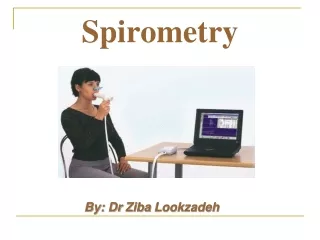
Spirometry By:Dr ZibaLookzadeh
Introduction • A non-invasive method for evaluation of pulmonary function • Simple, cost-effective, accessible • Not for definite diagnosis of disease but help diagnosis along with history, physical examination and other paraclinical diagnostic method
Spirometry as a screening method • Primary prevention • Pre-placement and fitness-for-duty examinations • Physical demands of a job (heavy manual labor, fire fighting); • Characteristics of respiratory use (prolonged use of negative-pressure mask under conditions of heavy physical exertion and/or heat stress - not required by OSHA); • Research and monitoring of health status in groups of workers.
Spirometry as a screening method • Secondary prevention • Medical surveillance programs – workers at risk of developing occupationally related respiratory disorders • Baseline and periodic evaluations • Mandated OSHA regulations (asbestos, cadmium, coke oven emissions or cotton dust) • Local mandated medical surveillance program • Component of workplace health promotion program
Spirometry as a screening method • Tertiary prevention • Clinical evaluation of symptomatic individuals • Restrictive • Obstructive • Combined ventilatory defects • Disability under Social Security Administration • Workers’ compensation setting
Contraindications of Spirometry • Uncontrolled hypertension • Suspected presence of active TB other communicable respiratory disease • Thoracic or abdominal surgery within recent 3 wks • MI or unstable angina within recent 6 wks • Respiratory distress • Active hemoptysis • Recent eye/ear surgery or ear drum perforation • Abdominal or thoracic aortic aneurysm
Confounding factors • Common cold (3 days ego) • Severe respiratory infection (3w) • Smoking( 1hr) • Heavy food (1hr) • Bronchodilator use
Complications • Chest pain • Syncope, dizziness • Increased ICP • Paroxysmal coughing • Nosocomial infection • Bronchospasm
Lung volumes • TV :The volume of air inhaled & exhaled at each breath during normal quiet breathing • IRV: The maximum amount of air that can be inhaled after a normal inhalation • ERV: The volume of air that can be forcefully expired following a normal quiet expiration • RV: The volume of air remaining in the lungs after a forceful expiration
Lung capacities • TLC: The total volume of the lungs • VC: The maximum amount of air that can be exhaled after the fullest inspiration possible • IC :The maximum of air that can be inhale after end tidal position • FRC: The amount of air remaining in the lungs after a normal quiet expiration
Spirometry Parameters • Forced Vital Capacity • FVC • Forced Expiratory Volume in One Second • FEV1 • Forced Expiratory Volume in One Second Expressed as a Percentage of the Forced Vital Capacity • FEV1/FVC % • Mean Forced Expiratory Flow during the Middle Half of the Forced Vital Capacity • FEF 25-75%
FVC • Definition: • Defined as the maximal amount of air that can be exhaled forcefully after a maximal inspiration or the most air a person can blow out after taking the deepest possible breath.
FVC - forced vital capacity • defines maximum volume of exchangeable air in lung (vital capacity) • forced expiratory breathing maneuver • requires muscular effort and some patient training • initial (healthy) FVC values approx 4 liters • slowly diminishes with normal aging • significantly reduced FVC suggests damage to lung parenchyma • restrictive lung disease (fibrosis) • loss of functional alveolar tissue (atelectasis) • intra-subject variability factors • age • sex • height • ethnicity
FEV1 • Definition: • The volume of air exhaled during the first second of a forced expiratory maneuver. • normal FEV1 about 3 liters
FEV1/FVC% • Definition: • The value expresses the volume of air the worker exhales in one second as a percent of the total volume of air that is exhaled. • Calculated by using largest valid FEV1 and largest FVC even if they are not from the same tracing. • Find largest valid FEV1 • Find largest valid FVC • Divide FEV1 by FVC • Multiply by 100 to obtain percentage.
FEF25-75% • Definition: • The mean expiratory flow during the middle half of the FVC • More sensitive than FEV1. • Considerably more variability than FVC and FEV1. • ATS recommends only be considered after determining presence and clinical severity of impairment and should not be used to diagnosis disease in individual patients
PEF - Peak Expiratory Flow rate • measures airflow limitations in large (central) airways • PEF measurements recommended for asthma management • spirometry is recommended to help make the diagnosis of asthma • PEF not recommend to evaluate patients for COPD • cannot measure small airway airflow limitations • advantages of PEF tests • measurements within a minute (three short breaths) • uses simple, safe, hand-held devices that typical, costs $20 • disadvantages of PEF tests (compared to spirometry) • insensitive to obstruction of small airways (mild or early obstruction) • PEF is very dependent on patient effort (large intra-subject variability) • mechanical PEF meters are much less accurate than spirometers
The Original Wright Peak Flow Meter - Standard and Low Range versions
The Mini Wright Peak Flow Meter - Standard and Low Range versions (from left to right: Wright scale, EU scale, ATS scale)
FEV1 FVC PEF FEF25-75% V-T Curve F-V loop Most important parameters
Spirometry Performance Steps • Equipment performance criteria • Equipment quality control ( calibration & leak ) • Contraindications & interfering condition • Age, height, race, gender • Selection of appropriate reference value • Patient maneuver • Acceptability criteria • Reproducibility criteria • Selection of best curve and best result • interpretation
Equipment quality control ( flow-type calibration) • جهت انجام بررسي وضعيت کاليبراسيون از سرنگ 3 ليتري مخصوص استفاده مي شود. • از منوي دستگاه “calibration check ”- option را انتخاب کنيد (جهت حذف فاکتور اصلاح BTPS). • براي بررسي وضعيت کاليبراسيون اسپيرومترهاي flow- type بايد کاليبراسيون را باسه سرعت مختلف انجام داد. يکبار 3 ليتر را به مدت يک ثانيه (سریع) و بار دوم 3 ليتر را در مدت 2-3 ثانيه (سرعت متوسط) و بار آخر 3 ليتر را در مدت 6 ثانيه (سرعت آهسته) به دستگاه تزريق کنيد. در هر سه بار باید عدد ثبت شده FVC بين 2.91-3.09 ليتر باشد. در غير اينصورت کاليبراسيون دستگاه اشکال دارد . • توجه: نکات مذکور اصول استاندارد نحوه کنترل کاليبراسيون و نشت مي باشد ولي در عين حال توصيه مي شود از کتابچه راهنماي دستگاه اسپيرومتر خريداري شده، در مورد نحوه کاليبراسيون و نشت، توصيه هاي کارخانه سازنده دستگاه رانيز مطالعه کرده و آن را نيز در نظر بگيريد.
Equipment validation • Calibration: daily if for screening every 4hr
Subject’s position: • Sitting or standing? • Chair with arms & without wheels • Clothing • Chin & neck position • Nose clip • Denture
Good Start of Test • Start of test must be quick and forceful • No excessive hesitation • Best evaluated using the Flow-Volume tracing • No excessive back extrapolated volume
No Coughing • Especially during the first 1 second of the maneuver • Best if no coughing present during maneuver, however: • Some patients cough near the end of each test, if present then document
No Variable Flow Flow rate should be maximal and consistent throughout testing Volume-Time and Flow-Volume tracings should be smooth