Case Study Analysis of Head Injuries: Initial Assessment and Nursing Interventions
This case study explores the management of head injuries, focusing on initial assessment measures, types of head trauma, and necessary tests. It discusses vital monitoring parameters for nursing staff, interventions like craniotomy for subdural hematomas, and the importance of family communication in pediatric cases. Concerns about potential drug or alcohol involvement, postoperative assessments, and rehabilitation challenges are also examined. Understanding appropriate IV fluids and medications like corticosteroids can enhance patient outcomes in head injury cases.

Case Study Analysis of Head Injuries: Initial Assessment and Nursing Interventions
E N D
Presentation Transcript
Head Injuries Case Study of Allen NOTE: THERE ARE ANSWERS TO 2 CASE STUDIES HERE. I THINK YOU ONLY GOT ONE IN CLASS!!!!!
Airway patency • Protect cervical spine • Any others?
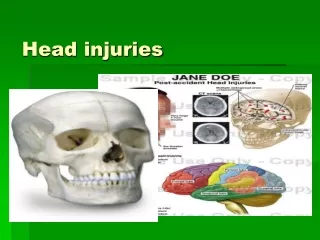
Contusion • Concussion • Skull fracture
Skull x-rays • CT or MRI of head • ABG’s • Cervical spine x-rays • Basic CMP and CBC
LOC • VS • Bleeding from cut • Check O2 sats • Watch for loss of clear liquid from nose or ears • Battles’s sign • Raccoon eyes
Parents decide…he is a minor • Call chaplain or counselor
Could be drug or alcohol usage • Most likely a subdural hematoma
CT of head • Drug screen • CBC, BMP, ABG’s
Glasgow coma scale • VS • LOC • Watch for drainage of wound or from ears or nose
How would the nurse determine the origin of the clear nasal drainage?
Look for halo or ring • Document color, amount and appearance • Can test liquid for glucose but not reliable
Corticosteroids • Mannitol
1. Are these blood gases acceptable? What is happening? What ventilator changes?
CO2 is high and pH is low • Increase vent rate to get rid of CO2 (hyperventilate) • What will high CO2 do?
Relationship between hyperventilation and cerebral blood flow?
Hyperventilation blows off CO2, corrects acidosis and keeps ICP down.
HOB up 30 degrees • Knees straight • Head in alignment
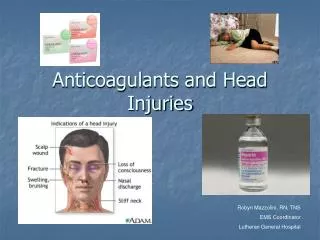
Battles’s sign-basilar skull fracture • Look for rhinorrhea and otorrhea • High risk for infection • May develop hematoma
ICP is 25 • BP = 90/30 • CPP?
CPP=MAP-ICP. • MAP=DBP + 1/3 (SBP-DBP) • MAP=30+ (90-30) 3
Could cause ischemia • Raise MAP and lower ICP • Check IV fluids, use of diuretics or dopamine • Surgery? • HOB and body position good?