Download
1 / 6
60 likes | 175 Vues
This overview explores the strategies employed by Japan and the Allies during World War II. Initially, Japan succeeded in dominating the Pacific, capturing key territories like the Philippines following its attack on Pearl Harbor. However, by 1942, Allied victories shifted the momentum, leading to the island-hopping campaign. The demanding battles of Iwo Jima and Okinawa marked the Pacific War's turning point. Meanwhile, in Europe, the Allies faced challenges with German and Italian forces but ultimately drove them back, with pivotal actions including the Battle of Stalingrad and the invasion of Italy.

E N D
WWII Two Fronts
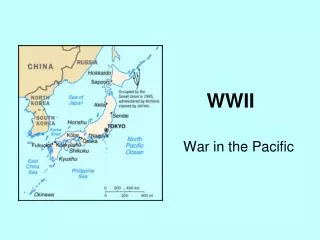
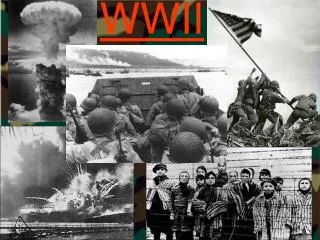
War in the Pacific • Japan’s strategy • Attack Pearl Harbor = US will withdraw from western Pacific • Take over South Pacific and be dominant throughout Asia • First year of the war, this strategy works • Japan controls most islands in western pacific • Philippines captured by Japan (10,000 + US soldiers • Allies focus on defending China and India • Course of War shifts (1942) • Allied victories put Japan on defensive • Allies begin long process of island hopping (capturing one island at a time from which to stage the next assault) • Two major battles (1945) • Iwo Jima – 25,000 US casualties (iconic image of war) • Okinawa – 350 miles from Japan • Japan pledged to fight to the death = need to invade to win
War in Europe • Germany/ Italy control most of Europe/ North Africa • Germans open eastern front vs. USSR • Battle of Stalingrad (1942) • Allies Invade Africa (1943) • Several early defeats, then success = Italian/ German retreat • Allies Invade Italy (1943) • Capture Rome, but difficult to go further because of German strength and geography • Italy’s new government (not fascist) declares war on Germany