
The Evolution of Spain: From Roman Rule to Muslim Influence and Christian Unification
E N D
Presentation Transcript
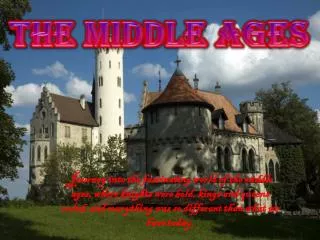
THE MIDDLE AGES Unit 12
476 AD The Romans left spain. 711 AD Muslims invaded Spain. 1492 AD Christians conquered Granada
A city in Al - Andalus Itis a palace Itis a fort Thecraftworkerslived medina It´s a mosque Itis a market place Itprotected
Christian territory Navarra Aragón Castilla Portugal Granada Muslimterritory
Muslimlegacy • New crops: aubergines and rice. • Paper, compassandArabicnumerals(zero). • Beautifulbuildings: Alhambra in Granada and mezquita in Córdoba. • Improvements in medicine, astronomyand mathematics. • Theybuiltlibrariesansestablisheduniversities. Theunification of Spain. When King Fernando II of Aragón and QueenIsabel I of castilla married in 1469, theyunitedtheirtwokingdoms and madeonelarge and powerful Christian kingdom.
FEUDALISM • Feudalismwasthenameforthe social organisationduringtheMiddleAges. • TheKingruledthe country. • A noblewasloyaltotheking. • A knightfought in thenoble´sarmy. • Theclergylived in monasteries and convents. Thepeasantspaidthem. Theyprayed, studied and copiedtheancientsbooksbyhands. • Thepeasantsworkedontheland. Most of themwereserfs, theyweren´t free people.
Medieval city Mainsquare cathedral Town hall walls gateway walls